USA Dual Door AI Vending Cabinet Case for Chilled and Frozen Retail
This U.S. field deployment shows how the WEIMI AI-VISION-DUAL-DOOR cabinet combines frozen and chilled storage for packaged food, drinks, and convenience items in one self-service retail point. The customer can unlock a door, take one or multiple items, and close it for AI vision recognition and automatic checkout.

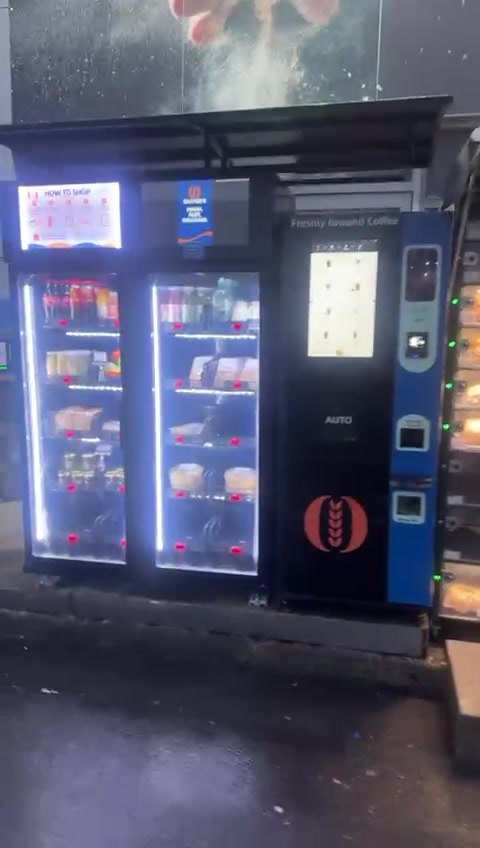
Field image of a WEIMI dual-door AI vision vending cabinet installed for a U.S. customer. The customer name, specific location, operating data, and installed payment provider remain private.
What the Field Image Confirms
The installation combines two illuminated, glass-front cabinets with two overhead digital screens. The left compartment is designed as a freezer, typically operating from -18°C to -22°C, while the right compartment is a chiller, typically operating from 4°C to 8°C. Adjustable open shelves support frozen meals, ice cream, drinks, dairy products, salads, fresh meals, and other compatible packaged SKUs.
Definition: A dual-door AI vision vending cabinet is a self-service retail system in which customers authorize access, open a door, take one or multiple products, and close the door. Computer vision identifies the selected items so the configured payment system can complete checkout automatically.
Key takeaway: one footprint can serve frozen and chilled demand without forcing both product groups into the same temperature zone or traditional spiral channels.
Why a Dual-Cabinet Layout Fits Mixed-Product Retail
A single cabinet can serve a focused assortment. A dual-door layout gives an operator more room to separate chilled and frozen products by storage need, size, demand, handling requirements, or replenishment rhythm. In this installation, one side appears denser with packaged food and beverages, while the other uses more open shelf spacing for a broader convenience assortment.
This separation matters. Fast-moving drinks can be grouped for quick recognition, while larger or irregular packages receive more shelf space. The arrangement can also make restocking easier because the operator can assign each cabinet a clear category role instead of mixing every SKU into one planogram.
For buyers evaluating a similar project, review the AI Vision Dual-Door Freezer and Chiller Smart Vending Machine. The product configuration supports AI vision recognition, flexible open-shelf merchandising, remote sales and inventory visibility, pricing and promotion updates, market-specific payment integration, and no fixed monthly SaaS subscription fee.
Architecture Comparison for Similar Projects
| Retail architecture | Best fit | Customer interaction | Main planning priority |
|---|---|---|---|
| Dual-door AI chilled and frozen cabinet | Mixed packaged food, drinks, and convenience items | Browse visible shelves, follow the configured screen and access flow | Temperature zoning, AI recognition accuracy, payment authorization, and replenishment |
| Coil vending machine | Uniform packages that dispense reliably through configured channels | Select, pay, and collect from the delivery bin | Package testing and channel sizing |
| Locker vending system | Pre-orders, fragile items, or individually assigned compartments | Enter a code or complete the configured purchase, then open one compartment | Compartment dimensions and order integration |
| Staffed micro-market | Sites that need human service or assisted transactions | Browse and complete checkout with staff support | Labor coverage, shrink control, and operating hours |
Key takeaway: choose the architecture from the product and operating constraints first. A large digital screen or attractive cabinet cannot compensate for weak package testing, unclear access logic, or an impractical replenishment plan.
How the Customer Journey Should Work
The AI-VISION-DUAL-DOOR configuration uses a short grab-and-go sequence that removes spiral selection and product-drop waiting:
1. Authorize and open
The customer follows the installed payment authorization flow and unlocks the freezer or chiller door.
2. Take one or multiple products
The customer chooses naturally from the open shelves. AI vision supports multi-item recognition within one transaction.
3. Close and complete checkout
After the door closes, the system identifies the selected items and completes checkout through the configured payment integration.
Key takeaway: the open-take-close sequence feels familiar to customers while the AI layer handles item identification behind the scenes.
Operator Workflow Behind the Customer Experience
Unattended retail succeeds when the operator can repeat a disciplined routine. The WEIMI cloud management backend can support remote sales and inventory visibility, SKU performance review, replenishment planning, and remote pricing or promotion updates.
1. Build a product master list
Record package dimensions, storage requirements, selling price, shelf position, and expected replenishment frequency for each SKU.
2. Test the planogram with real packages
Load physical samples, check label visibility, allow hand clearance, and confirm that doors, shelves, cameras, or sensors are not obstructed.
3. Define replenishment triggers
Use remote inventory visibility to identify fast-moving SKUs and likely stockouts, then combine alerts with a practical on-site service schedule.
4. Review exceptions
Assign a response for failed access, payment disputes, temperature alerts, damaged packaging, and recognition exceptions.
Key takeaway: the cabinet is the visible part of the project; SKU control and exception handling determine whether the operation remains reliable.
Deployment Lessons for Similar Buyers
Match shelf geometry to the assortment
The image shows packages with very different heights and widths. Adjustable shelves and a deliberate product map are therefore more useful than a nominal capacity figure that ignores real packaging.
Treat the screens as operating tools
Two overhead displays can support different cabinet roles, but their content should remain consistent. Customers need the same naming, pricing, and instructions across both sides.
Design for replenishment before installation
Confirm door swing, service clearance, shelf access, nearby power, connectivity, and the route used to bring stock to the machine. A visually strong location can still be difficult to operate if staff cannot restock it efficiently.
Measure the first operating period
Track stockouts, failed transactions, product damage, dwell time, replenishment labor, and customer questions. Do not claim ROI until revenue, product cost, site fees, service cost, payment fees, spoilage, and the measurement period are documented.
Comparable deployments can help buyers frame these decisions. Review the U.S. smart fridge micro-market case, the double-door grab-and-go cabinet case, and the France fresh-food vending case.
What Buyers Should Confirm Before Quotation
- Provide the complete SKU list with package dimensions, weight, storage needs, and photos.
- Confirm whether the site needs refrigeration, ambient storage, or separately controlled zones.
- Specify the intended access, product-recognition, and payment workflow.
- Share the installation footprint, door clearance, power supply, network conditions, and service route.
- Define branding, screen content, language, receipt, tax, and reporting requirements.
WEIMI can use this information to review the AI-VISION-DUAL-DOOR cabinet, shelf plan, temperature zones, AI recognition setup, software, interface, payment compatibility, and testing requirements. Buyers can also browse the WEIMI customer case library before preparing a project brief.
Frequently Asked Questions
1. What is a dual-door AI vending cabinet?
It is a self-service retail cabinet with two glass-front temperature zones and AI vision recognition. Customers unlock, take one or multiple products, and close the door for automatic item recognition and checkout.
2. What products can the chilled and frozen zones sell?
They may support packaged food, drinks, frozen items, and convenience products when shelf dimensions, package stability, legal requirements, and specified storage conditions are compatible. Every proposed SKU should be reviewed.
3. Does the installation in the photo use AI?
Yes. This product uses computer vision to identify selected items after the customer closes the door.
4. What temperature range does this machine maintain?
The left freezer is typically specified from -18°C to -22°C, while the right chiller is typically specified from 4°C to 8°C. Final setpoints should still be confirmed against the product list, site conditions, and local food-safety rules.
5. Which payment methods are available?
The product supports market-specific card, contactless, and mobile payment integration. The provider installed for this U.S. customer has not been disclosed.
6. Why use two cabinets instead of one?
Two cabinets can expand assortment space and separate categories, package sizes, storage requirements, or replenishment cycles. The benefit depends on site demand and the final product map.
7. Can the screens show advertising?
Yes. Cabinet graphics, logo, screen content, and supported payment configuration can be customized for the project.
8. How should the operator plan restocking?
Start with SKU-level shelf positions, then use remote sales and inventory information to plan replenishment. Keep a scheduled inspection routine for cleaning, package condition, and temperature checks.
9. Can this case be used to estimate ROI?
No. A photograph does not provide revenue, margin, service cost, site cost, spoilage, or a measurement period. ROI requires documented project data and a stated calculation method.
10. What should a buyer send WEIMI for a proposal?
Send the SKU list, package samples or dimensions, storage requirements, site information, target customer flow, payment preference, branding files, and required operating reports. Use the vending project inquiry form to begin the configuration review.
References
- AI Vision Dual-Door Freezer and Chiller Smart Vending Machine
- How Three AI Smart Fridge Vending Machines Created a Grab-and-Go Micro Market in the USA
- Spain Customer Deploys a Double-Door Gravity Vending Cabinet for Grab-and-Go Retail
- France Salad Vending Machine Case Study for 24/7 Fresh Food Access
- Fresh Flowers Around the Clock: A WEIMI Customer Case in Romania
- Fresh Cake Sales Beyond Shop Hours: A Refrigerated Locker Vending Customer Case
- From Maritime Terminal to Last-Minute Gift Shop: A Saint-Malo Souvenir Vending Case
- WEIMI WM22 in Panama: A Smart New Way to Sell Pokemon Collectibles
- From Smart Vending Platform to Pink Beauty Micro-Store: A Mexico Customer Case
Thailand Hospital Medicine Vending Machine Case with CarePoint 24
Estonia Customer Case Outdoor Vending for 24 Hour Retail
Related Article