How Three AI Smart Fridge Vending Machines Created a Grab and Go Micro Market in the USA
How Three AI Smart Fridge Vending Machines Created a Flexible Grab-and-Go Micro Market
A real U.S. deployment shows how computer-vision AI cabinets can turn a compact space into an unattended retail point for drinks, snacks, frozen treats and ready-to-eat food.
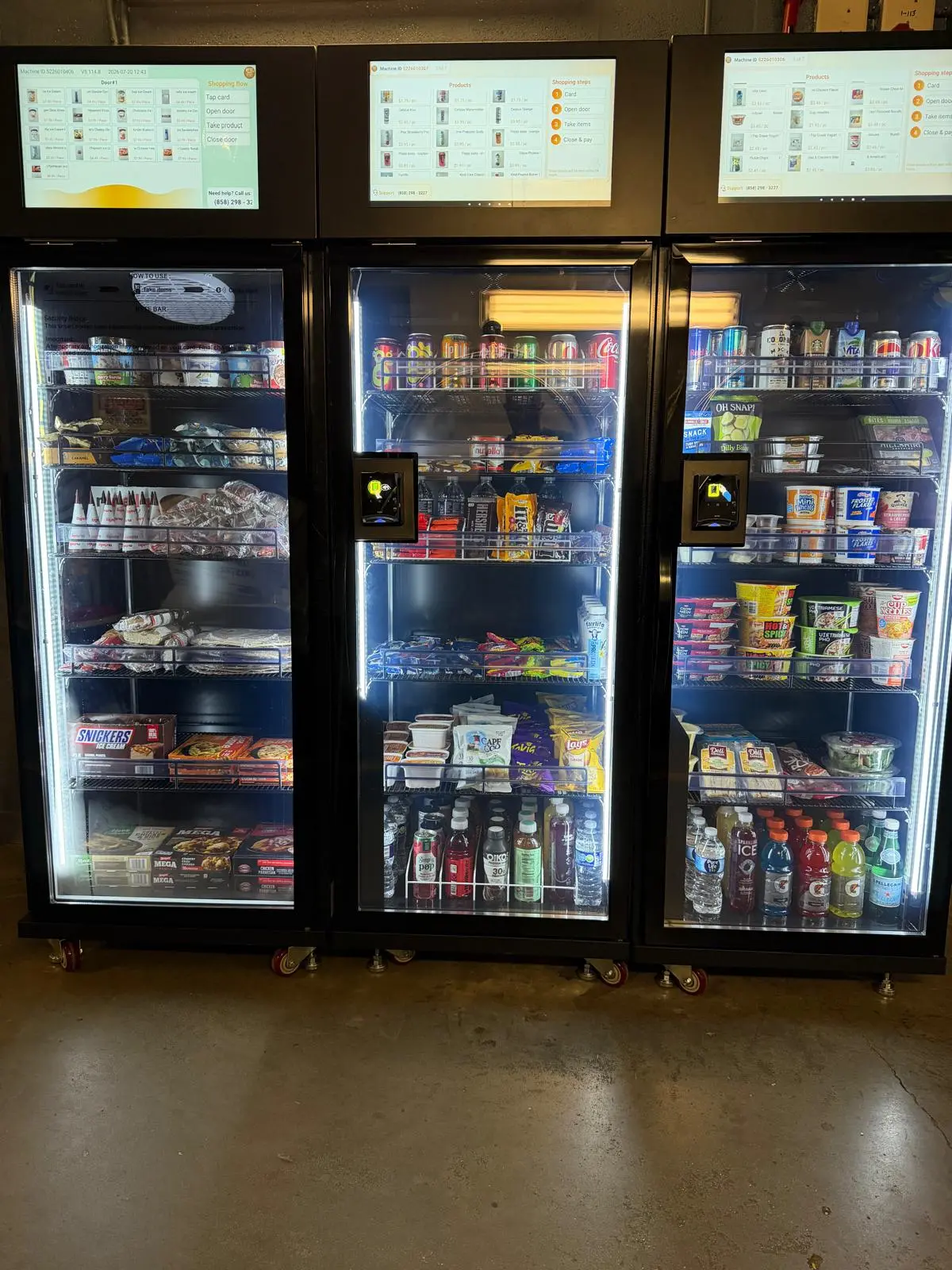
The U.S. customer configured three smart fridge cabinets as one high-capacity, cashless retail zone.
Traditional vending machines are designed around fixed selections and mechanical dispensing. That model works well for standard cans and packaged snacks, but it becomes restrictive when an operator wants to sell products with different shapes, sizes and storage needs.
A U.S. customer recently chose a different approach: three smart fridge vending machines installed side by side to create a compact grab-and-go micro market. The photo from the customer site shows a broad mix of beverages, snacks, frozen products, cup meals, ice cream and other packaged foods displayed on open shelves behind illuminated glass doors.
Instead of selecting a code and waiting for a coil to turn, shoppers interact with these cabinets much like they would with a refrigerator at home: authorize payment, open the door, take what they want and close the door. The system then completes the transaction automatically.
| Market | United States |
| Configuration | Three single-door smart fridge vending machines |
| Shopping Model | Cashless grab-and-go with automatic settlement |
| Recognition | Dual-camera AI vision and computer-vision product recognition |
| Payment Access | Door-mounted cashless card readers |
| Visible Product Mix | Drinks, snacks, frozen treats, cup meals and packaged foods |
More Assortment Without the Limits of Traditional Vending
The strongest feature of this U.S. installation is not simply its capacity. It is the freedom to merchandise different product categories inside the same unattended retail area.
Traditional spiral machines require every product to match a particular coil or delivery channel. Irregular packages can become stuck, and changing the product mix may require hardware adjustments. Open-shelf smart fridges remove many of those mechanical restrictions. Operators can arrange products in baskets and shelf sections according to local demand rather than forcing every item into a fixed vending slot.
For this customer, a three-cabinet configuration also creates clear merchandising zones. One cabinet can focus on frozen or packaged meals, another on snacks and beverages, and the third on convenience foods and additional cold drinks. The exact assortment can change over time without rebuilding the entire vending layout.
A Four-Step Shopping Flow Customers Already Understand
|
1
Tap a CardThe payment reader authorizes access and unlocks the selected fridge. |
2
Open the DoorCustomers browse the real products directly instead of relying only on a digital menu. |
3
Take ProductsOne or several items can be removed during the same shopping session. |
4
Close and PayThe system identifies what was taken and automatically settles the transaction. |
Computer Vision Behind the Grab-and-Go Experience
When a customer authorizes payment and opens the cabinet, the integrated wide-angle cameras begin recording the shopping session. The cameras observe product movement across the shelves, including products that are picked up, returned or exchanged before the door closes.
The visual data is analyzed through the AI recognition system, which matches the shopping behavior with trained product images and SKU information. After the door closes, the system determines which products left the cabinet, completes the billing and synchronizes the transaction with the cloud platform.
Products do not require individual barcode scanning or RFID tags during checkout. Customers can take several products in one session and return an unwanted item before closing the door. Abnormal activity can be marked for review, helping the operator maintain a traceable unattended retail process.
Six Practical Advantages Visible in One Real Installation
1. High Product VisibilityFull-height glass doors and internal LED lighting allow customers to see the actual products before opening the cabinet. |
2. A Genuinely Mixed AssortmentThe customer is using the cabinets for cans, bottles, snacks, frozen desserts, cup meals and multiple packaged food formats. |
3. Cashless Access on Every DoorEach cabinet has its own card reader, enabling secure access and automatic payment without a cashier. |
4. Clear On-Screen GuidanceThe upper displays show product information and a simple shopping flow: tap card, open door, take items, close and pay. |
5. Modular ExpansionThree independent cabinets can operate together as a larger retail wall while allowing product categories to remain organized. |
6. Faster ReplenishmentOpen shelving makes restocking more direct because operators are not loading products into individual coils or dispensing motors. |
Cloud Management Turns Three Cabinets Into One Manageable Retail Operation
The customer-facing experience is only one side of the system. On the operator side, the smart vending platform can record sales and inventory changes as transactions occur. Operators can review product performance, check stock levels and manage key settings remotely rather than visiting the location simply to find out what has sold.
For a multi-cabinet installation, that visibility is especially important. The operator can use actual sales data to decide which products deserve more shelf space, which items should be replaced and when a restocking visit is necessary.
Remote functions vary according to the final hardware, payment and software configuration, but commonly available tools include sales reports, inventory monitoring, price updates, advertising content, temperature settings, promotional pricing and account permissions.
Strong Potential for Semi-Controlled Locations Across the USA
Smart fridge vending works particularly well in places where people want a broader food selection but a staffed store or cafeteria is not practical around the clock.
| Corporate Offices | Apartment Buildings | Gyms and Fitness Centers | Hotels |
| Hospitals | Universities | Factories and Warehouses | Private Micro Markets |
A Practical Step Toward More Flexible Unattended Retail
This U.S. customer case shows what smart fridge vending looks like outside a showroom. Three cabinets, one straightforward shopping flow and a product range that would be difficult to accommodate in a single traditional vending machine.
For operators planning a new vending route or upgrading an existing unattended retail point, the key advantage is flexibility. Open shelving supports a broader assortment, computer vision automates product recognition and checkout, and cloud management provides the information needed to operate the location more efficiently.
Planning an AI Smart Fridge Project in the USA?
Tell us your target location, product mix, temperature requirements and preferred payment system. We will recommend the cabinet quantity and configuration for your project.
REQUEST A CUSTOM SOLUTIONFrom Smart Vending Platform to Pink Beauty Micro Store A Mexico Customer Case
Spain Customer Deploys a Double Door Gravity Vending Cabinet for Grab and Go Retail
Related Article