Egg Vending Machine Locations: Farm Gate and Community Shop
The best egg vending machine location is a site that customers can reach and operators can supply and service, with conditions suited to the actual machine. A farm gate and a community shop can both be considered. Compare them using the same checklist rather than assuming one setting will attract more buyers.
At a farm gate: check the whole arrival route
Walk from the road, parking area or footpath to the proposed machine position. Check whether customers can identify the entrance, approach safely and stand clear of vehicle movements. Consider lighting and visibility during the hours you intend to allow access. A machine beside the farm does not automatically provide a suitable customer route or permission for every installation.
At a community shop: check shared space
Review the shop entrance, aisles, nearby displays and the customer’s space for opening doors and carrying eggs away. Confirm the hours during which the machine can actually be reached. Agree access with the site operator, including what happens when the shop closes. An indoor setting does not remove the need to check ambient conditions and service clearances.
Compare replenishment and service routes
Follow the route used to bring packaged eggs to the machine. Record steps, narrow doors, carrying distances and points shared with customers. Check where stock can be handled without blocking access and how technicians can reach service panels. A nearby location may simplify a route, but its practical suitability should be observed rather than assumed.
Confirm power, connectivity and door clearance
Check the required supply against the order-specific electrical documentation and the actual connection point. Confirm the network arrangement needed by the installed control and payment configuration. Measure door movement and service access in the proposed position. Keep cables and site fittings out of the customer route using the appropriate installation arrangements.
Assess exposure against the specification
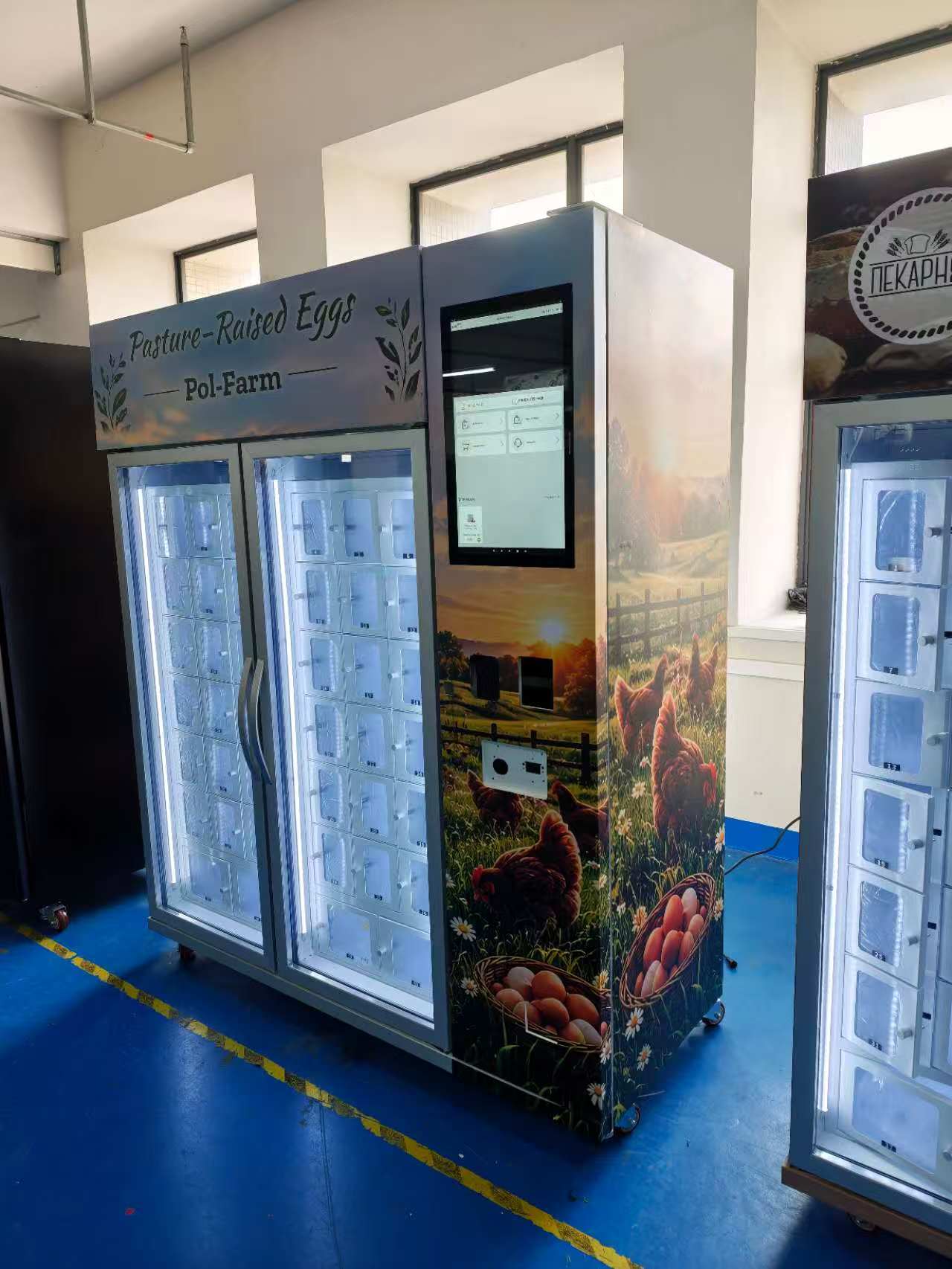
Record direct sun, rain, wind, dust and likely ambient conditions. Ask whether the specific ordered configuration is intended for those conditions and what shelter or other installation measures are required. A roof alone does not establish suitability, and a farm-themed cabinet is not proof of outdoor protection. For refrigerated equipment, site conditions also belong in the performance verification plan.
Complete the comparison before deciding
Use photographs, measurements and observations for each candidate site. Mark unknowns as items to resolve rather than assigning unsupported scores. Review customer help information, access permission and applicable site requirements with the relevant people. The comparison identifies installation questions; it does not predict sales or replace the final installation assessment.
A comparison sheet for both candidate sites
- Customer access: record the walking route, parking and vehicle conflicts at each site.
- Availability: record the hours customers can physically reach the machine.
- Visibility: check signage, lighting and screen readability at each site.
- Collection space: measure door movement and space to carry a carton away.
- Replenishment: record the loading route and stock-handling area.
- Utilities: confirm supply, connection position and required network arrangement.
- Environment: record exposure, shelter and machine-specific limits to verify.
- Support and service: identify help contacts, service access and unresolved actions.
Send WEIMI photographs and measurements of your candidate sites, together with power, network and environmental information. The location and machine configuration should be reviewed together before the installation plan is finalized.
Related planning guides
Egg Vending Machine Capacity and Locker Size Planning
Refrigerated Egg Vending Machine: Buyer Checks
Related Article