
Egg Vending Machine for Farms: Why Self-Service Egg Sales Are Reshaping Farm-Direct Egg Retail
U.S. CUSTOMER ORDER | FARM-DIRECT RETAIL
A customer in the United States has ordered the egg vending locker shown here for selling eggs. The cabinet brings a familiar farm product into a self-service retail format, combining individual compartments, a touchscreen, and a farm-themed exterior. It is a practical example of how farms can make direct egg sales more convenient for customers while reducing the time spent serving each purchase.
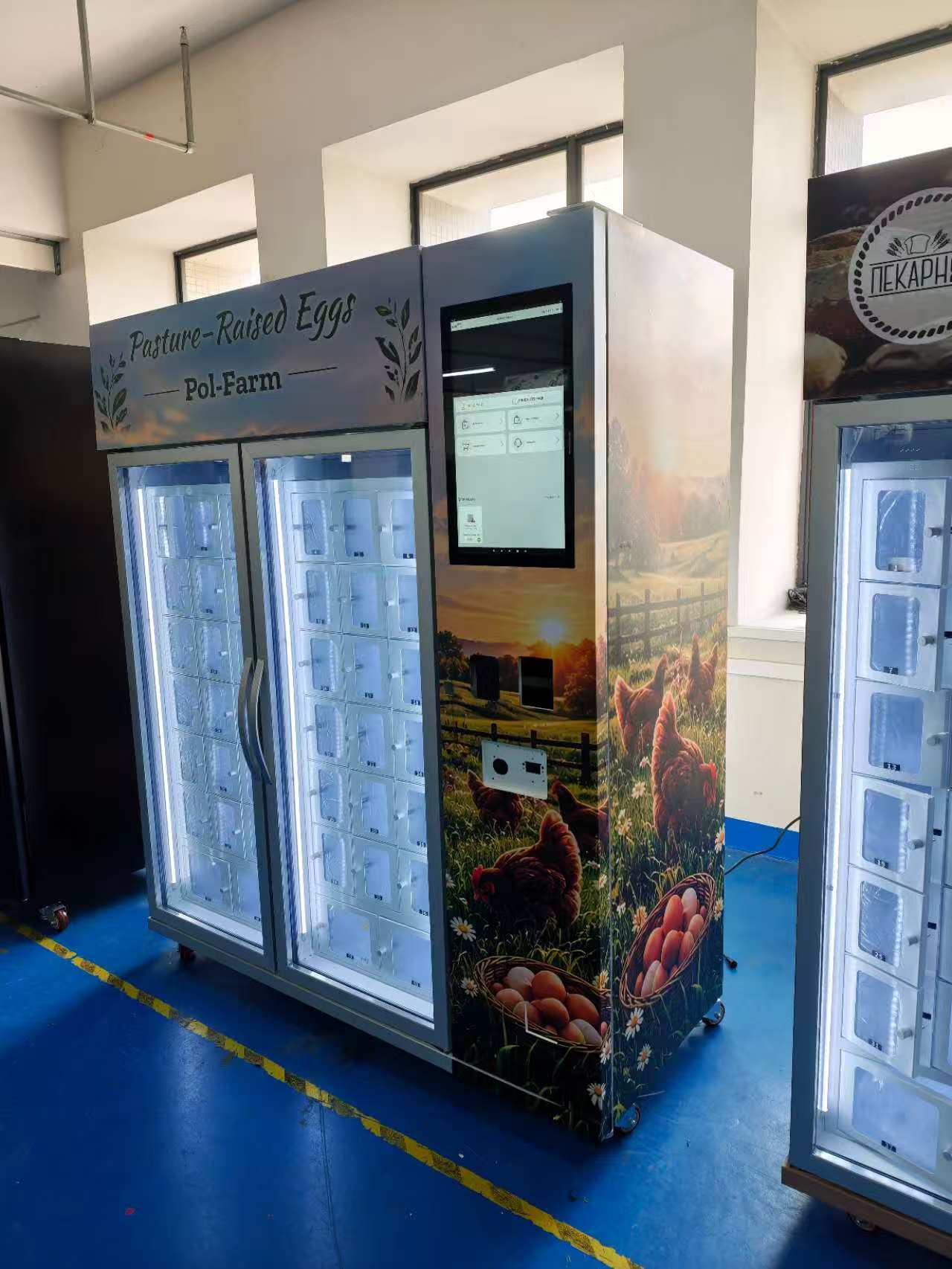
The egg vending locker ordered by our U.S. customer, pictured with its farm-themed exterior and individual collection compartments.
For a farm, the business question is simple: how can eggs remain easy to buy when the people producing them are busy caring for the flock, packing orders, or making deliveries? An egg vending machine offers one way to separate routine retail transactions from the rest of the working day.
Farm-Direct Sales Already Have an Established Market
Selling directly to consumers is an established part of U.S. agriculture. USDA's National Agricultural Statistics Service reported that direct-to-consumer food sales, including on-farm stores and farmers markets, reached $2.9 billion in 2020. That figure covers food broadly; it shows the scale of the direct-sales channel rather than the market share of egg vending machines.
An automated egg sales point builds on that existing channel. It gives farms another way to offer their products locally, with a collection format that can fit around customer routines and the farm's own workload.
Why Farms Have Stronger Reasons to Consider Egg Vending
1. Farm labor has to cover production and retail
Collecting eggs, caring for hens, sorting, packing, and cleaning all require attention. For a small team or family business, keeping a sales counter staffed can compete with those essential tasks, especially when customers arrive at unpredictable intervals.
Self-service egg sales can reduce the need for someone to handle every transaction. The farm still needs to replenish stock, check product condition, clean the cabinet, and provide support. The advantage is a more manageable retail routine, with less dependence on continuous counter service.
2. Customers need shopping hours that fit their lives
A nearby resident might want eggs before work or on the way home. A farm that sells only during a short staffed window can miss those opportunities. A well-located egg vending point can make a quick purchase easier without requiring an arranged collection time.
Where site access, equipment configuration, and local rules allow, vending can extend access beyond farm-shop opening hours. Clear signage, safe access, and dependable replenishment are what turn that extra availability into a useful service.
3. Direct sales give farms control over their local offer
A dedicated sales point lets the farm present its own name, set its retail offer, and explain what customers are buying. The farm imagery on this cabinet makes the intended product recognizable at a glance. Accurate carton labels and clear product information can then help customers choose with confidence.
Direct selling also allows the farm to retain the retail sale, although equipment, electricity, payment processing, maintenance, and replenishment costs still need to be included when assessing profitability. The value comes from building a viable local channel with a clear identity and a reason for customers to return.
4. Eggs are well suited to a repeat-purchase local service
Eggs are a familiar household staple, so an accessible collection point can become part of a regular shopping routine. A farm does not need to persuade every visitor to learn a new product category. It needs to offer the right pack sizes, transparent pricing, consistent availability, and a straightforward collection experience.
Why Individual Lockers Make Sense for Egg Cartons
Fragile products call for careful handling. In a locker format, an egg carton can rest in its compartment until the customer collects it, avoiding the drop associated with some conventional vending systems. This can reduce unnecessary handling during collection, while suitable packaging remains essential.
The transparent compartments in the pictured cabinet create a visible, organized display. A touchscreen provides a central interface for the machine. For any project, compartment dimensions, carton fit, payment configuration, and collection instructions should be planned around the farm's actual products and customers.
Toward a Mainstream Model for Agricultural Retail
Egg vending has the ingredients to become a mainstream option within farm-direct retail: a familiar product, a repeat-purchase need, a dedicated local sales point, and less dependence on a staffed counter. For a farm with suitable demand and a well-managed location, it can become a regular sales channel rather than an occasional addition.
The U.S. customer order gives this business model a concrete example. Its wider appeal lies in the connection between production and convenient local shopping. Similar thinking can apply to other packaged farm products, provided the cabinet and operating plan meet each product's storage and handling requirements.
Adoption will vary by location and farm size. The strongest opportunity is where customer traffic, restocking capacity, and operating costs support a reliable service. Under those conditions, self-service vending deserves a place alongside farm shops, markets, and other established agricultural sales channels.
Plan the Sales Point Around the Farm
Before choosing an egg vending machine, assess local demand, passing traffic, customer parking, carton dimensions, stock rotation, and replenishment frequency. Power, connectivity, cleaning, and a visible support contact also belong in the plan.
Storage conditions are equally important. For a U.S. project, confirm the applicable federal, state, and local rules for egg storage, labeling, and sale, then specify the temperature-control configuration needed for that location. A convenient sales point works best when product care and customer access are planned together.
A Practical Next Step for Farm Egg Sales
This egg vending locker ordered by a U.S. customer shows how a traditional farm product can be offered through a more flexible retail format. For farms balancing daily production with direct sales, the opportunity is to make buying eggs simple, recognizable, and repeatable.
Planning a self-service egg sales point? Share your carton sizes, target location, preferred compartment layout, and operating requirements with WEIMI to discuss a suitable egg vending solution.
Market context source: USDA NASS, Local Food Marketing Practices data, released April 28, 2022, covering 2020 sales.
Hot Food Vending Machine Restocking and Food Waste Control
Micron Smart Vending System Boosts Your Vending Sales
Related Article
