Watch Vending Machine in Singapore: A Kids Watch Case Study
SINGAPORE CUSTOMER CASE
A Singapore customer is using a watch vending machine to sell boxed kids watches. The installation brings together visible stock, a touchscreen catalogue and a clearly marked collection point. Its most useful lesson for retailers is straightforward: design the buying journey around the watch package and the customer's questions before choosing the cabinet.
The Case: Bringing Boxed Kids Watches into Self Service Retail
A watch vending machine is a self service retail cabinet that lets customers select a watch, complete the configured purchase process and collect the packaged product. For kids watches, the challenge extends beyond dispensing: shoppers also need to understand the model, package contents and next steps after purchase.
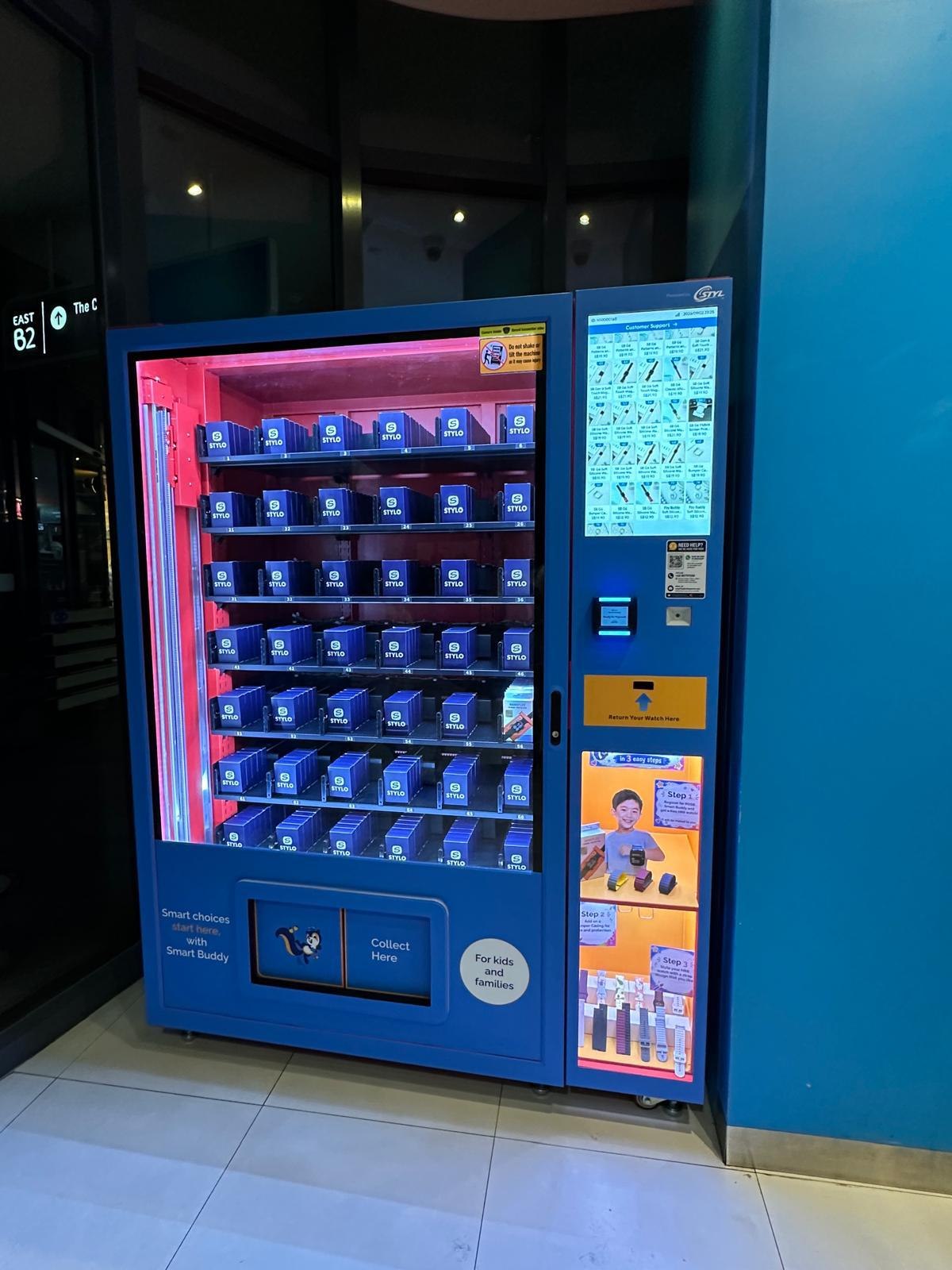
This Singapore watch retail installation uses a blue branded cabinet with several rows of boxed products behind a glass front. A touchscreen sits to the right, with a payment device beneath it. The lower collection area carries a prominent “Collect Here” instruction. Product and usage information appears on the surrounding panels.
Understanding the Smart Buddy Context
The cabinet carries Smart Buddy messaging. In Singapore, POSB Smart Buddy lets children make payments with a watch or card while parents manage allowances and monitor spending through an app. That background helps explain why watch retail may involve questions about setup and support as well as colour and appearance.
The payment functions of a watch are separate from the payment methods accepted by the vending machine. Each needs its own explanation. A retailer planning self service watch retail should make that distinction clear on the screen and in the customer guidance.
The Retail Problem: Showing the Product and Explaining the Purchase
Customers Need More Than a Photograph of a Watch
A boxed watch display gives customers a physical reference alongside the digital catalogue. The Singapore installation combines visible packaged stock with screen-based product selection. For another retailer, the practical requirement is to keep the displayed package, screen image, model name and actual dispensed item consistent.
Consider a retailer offering three colours. If two boxes look similar, the customer needs a clear colour name and matching image before payment.
Collection and After Sales Need Separate Instructions
The photo shows a dedicated collection point and a “Return Your Watch Here” label. That label signals a need for customer guidance; it does not establish an automated exchange or refund process. Return eligibility, inspection and refund responsibility must be defined by the operator.
Key takeaway: A smart watch vending machine should explain what customers are buying, where they collect it and who helps afterwards.
The Solution: A Watch Retail Layout with Distinct Customer Touchpoints
Visible Inventory and Touchscreen Selection
The photographed cabinet separates the stocked product area from the touchscreen. This gives the retailer room to show the physical range while using the catalogue for model information. Singapore watch retail projects can apply the same principle: let the package establish a physical reference and let the interface explain the differences.
WEIMI offers a kids smart watch vending machine with touchscreen and product display for this application. The product combines watch merchandising and a dedicated pickup arrangement. Buyers should match the selected configuration to their own watch packaging, payment requirements and service process.
A Collection Area Customers Can Identify
The large collection instruction is a useful detail. A customer who has just paid should immediately know where to look next. Before ordering a watch vending machine for sale, test the collection opening with the largest retail box, including any outer sleeve. Check whether a first-time user can identify and retrieve it without assistance.
Comparison: A Staffed Counter and a Dedicated Watch Vending Point
Compare the two approaches by how each buying task is handled and tested.
| Buying task | Staffed counter | Vending approach | What to verify |
|---|---|---|---|
| Choose a model | Staff explain the range. | Catalogue and display explain the range. | Images, names and channel assignments match. |
| Check the package | Staff can present a sample. | Visible stock provides a physical reference. | Contents and exclusions are stated clearly. |
| Complete payment | A cashier handles checkout. | The configured payment device handles checkout. | Approval, failure and cancellation paths are tested. |
| Receive the watch | Staff hand over the box. | The customer uses the collection area. | Package integrity and pickup access are checked. |
| Request support | Staff explain the service policy. | Screen and cabinet guidance direct the customer. | A responsible service contact is available. |
How to Apply the Lessons Before Launch
These are recommended checks for a new project, rather than a reconstruction of the Singapore customer's commissioning process.
- Measure every retail package. Record width, depth, height and weight, including sleeves or accessories supplied in the box.
- Match the catalogue to the stock. Verify each model, colour, price and channel assignment using the actual packaged item.
- Test the transaction. Check successful payment, declined payment, cancellation and the response when a product cannot be delivered.
- Check collection and support. Test pickup with a first-time user and display the operator's service and return instructions.
- Review early operating records. Track attempted purchases, completed deliveries and service requests separately before evaluating commercial performance.
A useful boxed watch display supports the purchasing decision. Reliable delivery and clear support complete it. For self service watch retail, all three belong in the acceptance plan.
The Outcome and the Main Buying Lesson
The confirmed outcome is a real Singapore customer application selling watches through a branded cabinet. The photograph documents the installed retail layout and the products presented for sale. It does not establish transaction volume, revenue, payback period or customer satisfaction.
Our position is that package handling and the complete customer journey should determine machine selection. When comparing a watch vending machine for sale, ask for a demonstration with your actual boxes and your intended payment setup. A smart watch vending machine should be assessed as a retail process, not only as a piece of equipment.
Frequently Asked Questions
1. What does this Singapore customer sell?
The customer uses the machine to sell watches. The installation photo shows boxed kids watch products and a touchscreen catalogue.
2. What is a watch vending machine?
It is a self service cabinet for selecting and purchasing watches, with a collection area for the packaged product. Available functions depend on the configuration.
3. Why combine visible products with a touchscreen?
The physical display provides a reference for the package, while the screen can explain model choices and purchasing instructions. Both should identify the same stocked item.
4. Can the machine sell several watch colours?
A suitable configuration can support different models or colours. Package fit, channel assignments and catalogue accuracy need checking before launch.
5. Which payment methods should a Singapore retailer confirm?
Confirm the cards, wallets and local networks accepted by the proposed terminal and payment provider. Test successful, declined and cancelled transactions; the photo does not identify enabled methods.
6. Does Smart Buddy watch payment mean the machine accepts it?
No. A watch's payment capability and a vending terminal's acceptance are separate matters. The operator must confirm supported methods for the machine.
7. How should watch returns and exchanges be handled?
Define eligibility, inspection, a service contact and responsibility for refunds or replacements. A return label does not establish automation; software and physical handling must support the intended policy.
8. What records are needed to evaluate performance?
Record payment attempts, completed deliveries, unit margin, restocking visits and service costs. Assess these against the machine investment and site costs using actual operating data.
9. What should buyers send WEIMI before requesting a proposal?
Send package dimensions and weight, the product range, target country, payment requirements and intended service workflow. Physical packaging samples help define a useful dispensing test.
10. Where can buyers review the relevant WEIMI product?
Review the WEIMI kids watch vending product and configuration details, then confirm which options fit the project.
Plan a Watch Vending Project Around Your Products
Start with the watch package, purchasing journey and service responsibilities. Explore the WEIMI watch vending machine and contact WEIMI to discuss a configuration and package test for your market.
WEIMI Double Door Gravity Cabinet for Fresh Food Retail in Ireland
Smart Vending Cafe in Japan How 24/7 Automated Food Retail Is Redefining Convenience
Related Article