Egg Vending Machine Handling: Reduce Egg Breakage
To reduce egg breakage in a vending machine, trace the packaged eggs through preparation, transport to the cabinet, loading and customer collection. Look for impact, pressure and awkward handling at each stage, then test any change with suitable samples.
A locker layout can be matched to different egg packaging, but a carton fitting inside a compartment does not prove it can be handled comfortably. This guide focuses on finding and recording those practical risks, without promising a particular breakage rate.
1. Inspect the Packaging First
Check the intended carton in its closed, filled form. Look at the lid, base, dividers, closure and any sleeves or handles. Follow the packaging supplier’s intended use, including any stated limits on handling or stacking.
Record the package type used in the trial. If several designs are sold, test each relevant design rather than assuming that equal egg counts mean equal protection or external dimensions.
2. Locate Contact Points in the Locker
Compare the actual package with the usable compartment space and clear door opening. Observe where the carton touches the frame, hinge area or adjacent surfaces during insertion and withdrawal. Include the space a hand needs to support it.
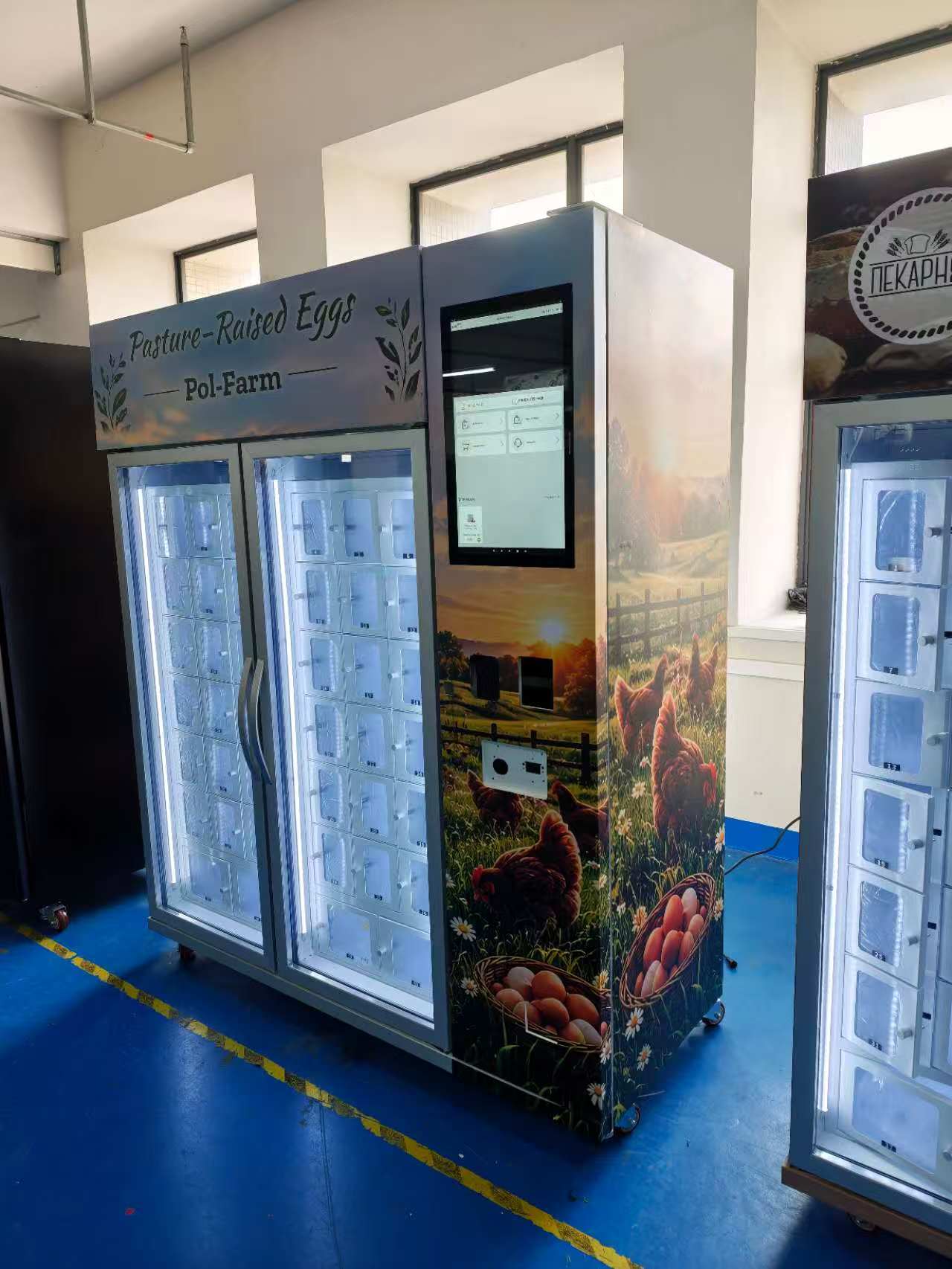
WEIMI can configure different locker sizes for different packaging. Confirm the arrangement through a sample fit test; do not infer suitable clearance or safe stacking from the cabinet photograph.
3. Review the Loading Route
Watch the whole movement from the restocking container to the final locker position. Check whether the operator needs to twist, tilt, reach around an open door or move other cartons to finish loading.
Use a documented loading orientation and the confirmed quantity per locker. Make sure labels remain readable and the package does not obstruct closing. If several packs occupy a compartment, confirm the sales unit and collection instructions.
4. Observe Door Opening and Collection
Run the collection task using the real packaging and the configured door sequence. Check whether the door or handle obstructs a level withdrawal and whether the customer can support the carton without squeezing its lid.
Observe relevant upper, lower and different-size compartments. Record the actual circumstances rather than declaring every position equally comfortable. Clear collection instructions can support good handling, but do not compensate for a package that catches on the opening.
5. Record Where Damage Is First Found
Separate damage discovered before loading, during loading and after a collection trial. Note the package, compartment and observed event. Record uncertain causes as questions to investigate rather than established facts.
Use appropriate test samples and keep damaged or otherwise unsuitable stock out of sale. Follow the applicable procedure for assessing and disposing of affected products. Do not return trial stock to sale without the required assessment.
6. Change One Arrangement and Re-Test
Identify the change being evaluated: packaging, orientation, locker allocation or handling instruction. Re-test under recorded conditions and compare observations using the same criteria. Avoid a percentage claim without a defined sample and reliable records.
Keep the approved arrangement available to operators. A later packaging change should trigger another fit and handling review rather than being treated as automatically compatible.
A Practical Damage-Investigation Record
- Stage, date, operator and package identification.
- Locker position, loading quantity and orientation.
- Observed contact, movement or damage; cause still to check.
- Change made and conditions used for the repeat trial.
- Result, unresolved issue and person responsible for follow-up.
Share packaging photos, closed dimensions and a short loading or pickup video with WEIMI to discuss the contact points and handling space that need testing.
Carton fit and capacity guide · Restocking and cleaning checklist · Egg vending machine options
Refrigerated Egg Vending Machine: Buyer Checks
Egg Vending Machine Usability: Screen, Door and Pickup
Related Article