Gravity Vending Machine: Why an Israeli Customer Chose WEIMI
An Israeli customer ordered WEIMI gravity sensing cabinets after considering local payment constraints. This case explains the choice, compares weight sensing with AI vision, and gives vending operators a practical route to checking products, readers and payment integration before shipment.
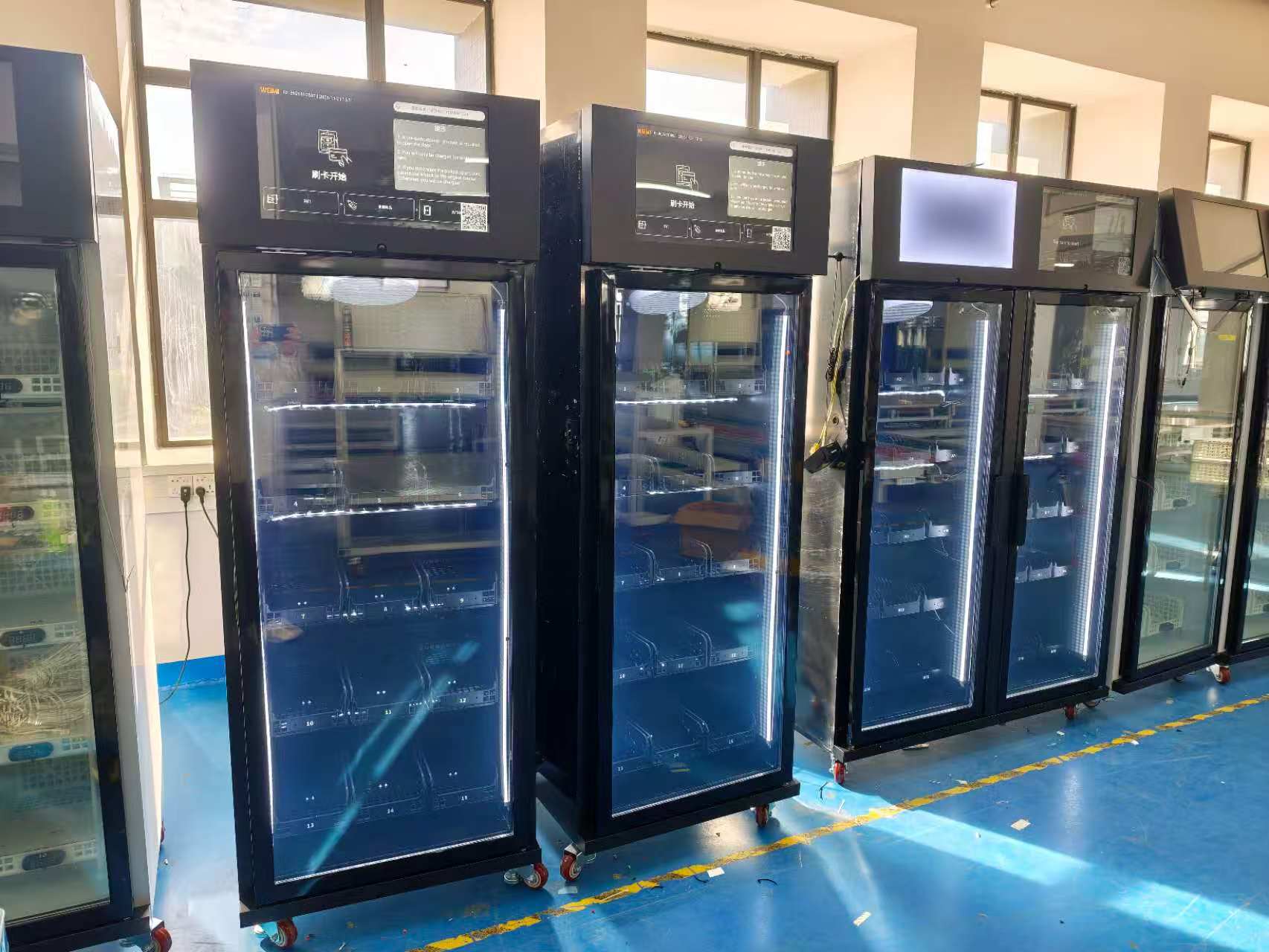
The order: why local payment fit shaped the choice
An Israeli customer has ordered WEIMI gravity sensing vending cabinets. The important purchasing question was practical: which cabinet configuration could be developed around the project's local payment requirements?
The payment hardware being considered with an AI cabinet was a concern for this project. The customer chose a gravity vending machine configuration as the alternative to pursue. The final payment provider and reader have not yet been selected. This case focuses on the order and equipment selection.
The lesson for buyers is clear: check the payment route before committing to a recognition system. A machine can identify products correctly and still be unsuitable if its payment workflow cannot be supported in the destination market.
For a smart vending cabinet in Israel or another Middle Eastern market, the country, merchant account and actual terminal matter more than a general claim of regional compatibility.
What is a gravity sensing vending machine?
A gravity sensing vending machine uses changes in weight on configured shelves or sensing zones to identify product removal and calculate a purchase.
In a typical setup, the operator assigns products to defined positions and configures their weight and price information. The cabinet compares readings before and after access. The exact access, charging and exception handling sequence depends on the supplied system and its payment integration.
Here, “gravity” means weight sensing. It does not mean a gravity-fed chute that drops a selected item into a collection bin.
Why the product assortment matters
A weight sensing vending machine needs to be tested with the goods it will actually sell. Package weight consistency, shelf placement and the way shoppers remove or return items can all affect the result.
Consider two practical tests: removing two units of one product, and removing one unit before returning it. Both should be included in an acceptance test. A successful single-item demonstration does not prove that every basket scenario works.
For a related product reference, explore the WEIMI weight sensing vending cabinet. Final model selection should follow the intended assortment and site requirements.
Gravity sensing or AI vision: what should buyers compare?
An AI vending machine generally uses camera images and a recognition model to identify products. A weight sensing vending machine relies on configured weights and sensor readings. Neither recognition method, by itself, establishes local payment compatibility.
| Procurement question | Gravity or weight sensing cabinet | AI vision cabinet | What to request before approval |
|---|---|---|---|
| How are products identified? | Changes in weight in configured sensing zones | Images interpreted by a recognition model | A demonstration with the actual proposed configuration |
| What assortment details matter? | Unit weight variation, shelf assignment and product placement | Packaging appearance, visibility and similar-looking items | Tests with the buyer's real packaging and product mix |
| Which shopper actions need testing? | Multiple removals, returns and items placed in another zone | Multiple removals, returns and partially obscured items | A written scenario list and recorded results |
| Is the local reader supported? | Depends on the reader, software and payment integration | Depends on the reader, software and payment integration | Confirmation for the exact terminal and destination market |
| Can it handle refrigerated goods? | Depends on the cabinet's cooling configuration | Depends on the cabinet's cooling configuration | A separate temperature specification and operating requirements |
| What makes it the better purchase? | A tested fit for the goods, payment route and operating team | A tested fit for the goods, payment route and operating team | Acceptance criteria agreed before the order is finalized |
Key takeaway: choose the complete operating configuration. Recognition technology is one part of that decision.
Why this matters for projects in the Middle East
Local support can differ between countries, payment providers and terminal models. A vending machine card reader available in one market may require a different arrangement in another.
In this Israeli order, the concern around the proposed AI cabinet's payment hardware made gravity sensing a relevant alternative. That experience is useful to other buyers, but it does not establish a region-wide restriction on AI vending machines.
Separate product recognition from payment approval
A smart vending cabinet needs two working systems: a way to determine what the shopper took, and a way to collect the correct payment. Switching from cameras to weight sensors changes the first system. The second still needs its own approval.
For example, a terminal may accept ordinary card purchases but still require additional integration for an unattended cabinet that authorizes access before the final basket value is known. The buyer should ask the payment provider to confirm the intended transaction flow, including any preauthorization, final charge and release of unused holds.
This is why selecting a vending machine card reader by brand name alone is insufficient. Confirm the terminal model, merchant onboarding, transaction flow, settlement currency and support responsibilities together.
Five checks before approving a cabinet for your market
1. Confirm the local payment route
Identify the payment provider, merchant account requirements, terminal model and settlement arrangement. Ask whether the proposed unattended transaction flow is supported.
2. Test the actual products
Provide real samples or representative packaging. Check weight variation, shelf assignment, multiple-item removal and returns before accepting the recognition setup.
3. Specify the cabinet environment
Confirm power, network access, indoor or outdoor placement and service access. If buying a smart fridge vending machine, specify the temperature requirements separately.
4. Agree on exception handling
Define what happens after a declined payment, interrupted connection, unrecognized basket or disputed charge. Assign each issue to the operator, equipment supplier or payment provider.
5. Approve the complete demonstration
Request a recorded test of access, product recognition, billing and transaction records. Record any local payment tests that must be completed after delivery.
What operators should take from this Israeli order
The customer chose a gravity vending machine because it offered an alternative configuration to investigate around the project's requirements. The next milestone is confirming the payment route and validating the complete purchase process.
For WEIMI buyers, that is a useful procurement principle: begin with the products and the destination market, then select the recognition and payment configuration that can be demonstrated together.
If the assortment needs refrigeration, evaluate a WEIMI smart fridge vending machine against the product's storage requirements. A glass-front cabinet or a weight sensing system alone does not establish food storage suitability.
Frequently asked questions
1. What is a gravity vending machine?
It is a cabinet that uses changes in weight on configured shelves or sensing zones to determine product removal. In this article, the term refers to weight sensing rather than gravity-fed dispensing.
2. Why did this Israeli customer choose gravity sensing?
The customer chose it as an alternative while considering local support for the payment hardware proposed with an AI cabinet. The final payment provider and reader are still being confirmed.
3. Is a gravity sensing vending machine always better than AI vision?
No. The better choice depends on the actual products, recognition tests, payment integration and operating conditions. An AI vending machine can be suitable when its complete configuration meets those requirements.
4. Does weight sensing automatically solve payment restrictions?
No. Product recognition and payment acceptance are separate. The reader, merchant account and intended transaction flow must still be confirmed for the destination market.
5. Can buyers choose their own local payment provider?
They can propose a provider for evaluation. Compatibility should be confirmed with WEIMI and that provider before the buyer assumes the cabinet can use the requested service.
6. What products work in a weight sensing cabinet?
Suitability depends on weight consistency, packaging, sensing-zone arrangement and handling. Test the real assortment; do not assume every product that fits on a shelf will be recognized correctly.
7. Can shoppers take more than one product?
Multiple-item pickup should be included in the proposed system's acceptance tests. Verify the intended combinations and the final bill rather than relying on a general capability statement.
8. Can a gravity cabinet sell chilled food and drinks?
A refrigerated version may be appropriate when its specified temperature performance meets the goods' storage needs. Confirm cooling and food handling requirements independently of the recognition method.
9. What if a shopper returns a product to the wrong shelf?
Ask WEIMI to demonstrate that scenario with the proposed configuration. Agree on how the system handles the basket and any exception, and include clear shelf labels and restocking instructions in the operating plan.
10. What should I send WEIMI for a suitable recommendation?
Send the destination country, site conditions, product list, package dimensions and weights, storage needs, expected assortment and preferred payment provider. These details support a specific configuration review.
Plan your own gravity cabinet project
Choosing a cabinet starts with a few concrete answers: what will it sell, where will it operate, and how will customers pay?
Contact WEIMI about your vending project with those details. Request a product handling test and a review of the proposed local payment route before confirming the final configuration.
Refrigerated Locker Vending Machine in Lithuania: Farm Retail Case
Smart Vending Cafe in Japan How 24/7 Automated Food Retail Is Redefining Convenience
Related Article