Baked Goods Vending Machine: Which Products Can You Sell?
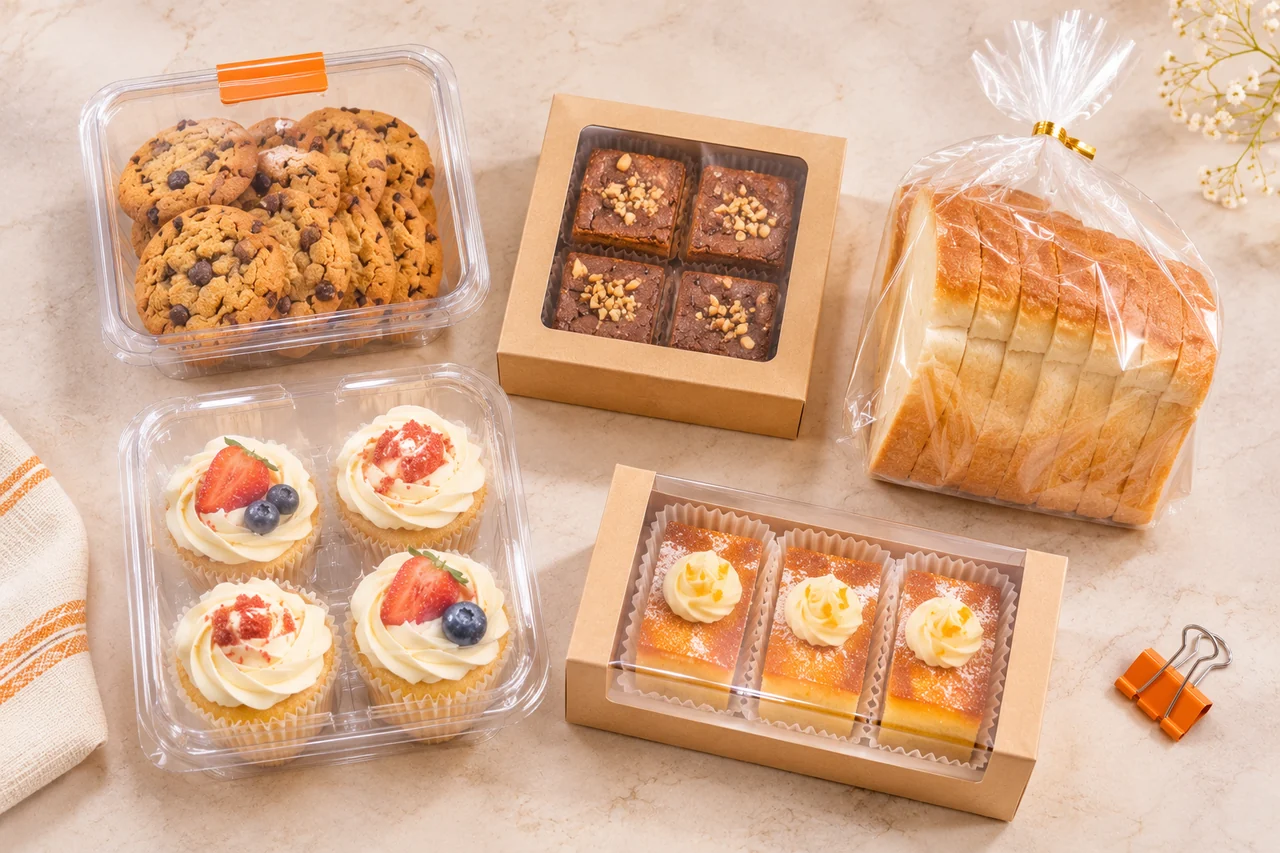
A baked goods vending machine can sell prepared, packaged bread, cookies, brownies, pastries and compatible cakes when the package, storage requirements and collection method have been approved together. Screen direct locker collection first for compatible delicate packs, then compare channel or elevator delivery. Start with a narrow assortment, test difficult items and exclude products whose handling or storage requirements remain unresolved.
Define suitability as a complete product and package combination
Product suitability means that a specific food, in its final packaging, can be stored, selected, dispensed or collected under the project's agreed conditions. A successful test of one cookie carton does not approve every cookie. A new lid, a wider label or a heavier assortment can change the outcome.
For a bakery chain, the useful unit of approval is the SKU and packaging revision. Record the recipe or product identity, pack dimensions, weight range, storage conditions and date-labelling method. Keep that record with the machine layout so that purchasing and production teams do not make conflicting changes.
Separate three reasons a product may be unsuitable
First, the package may not fit the tray, transfer mechanism or pickup opening. Second, it may fit but lose presentation quality during movement. Third, the equipment or operating schedule may not meet the food's validated storage and saleable-life requirements. Solving one of these problems does not solve the other two.
Use this assortment suitability matrix
| Product family | Package feature to examine | Format worth assessing | Reason to withhold approval |
|---|---|---|---|
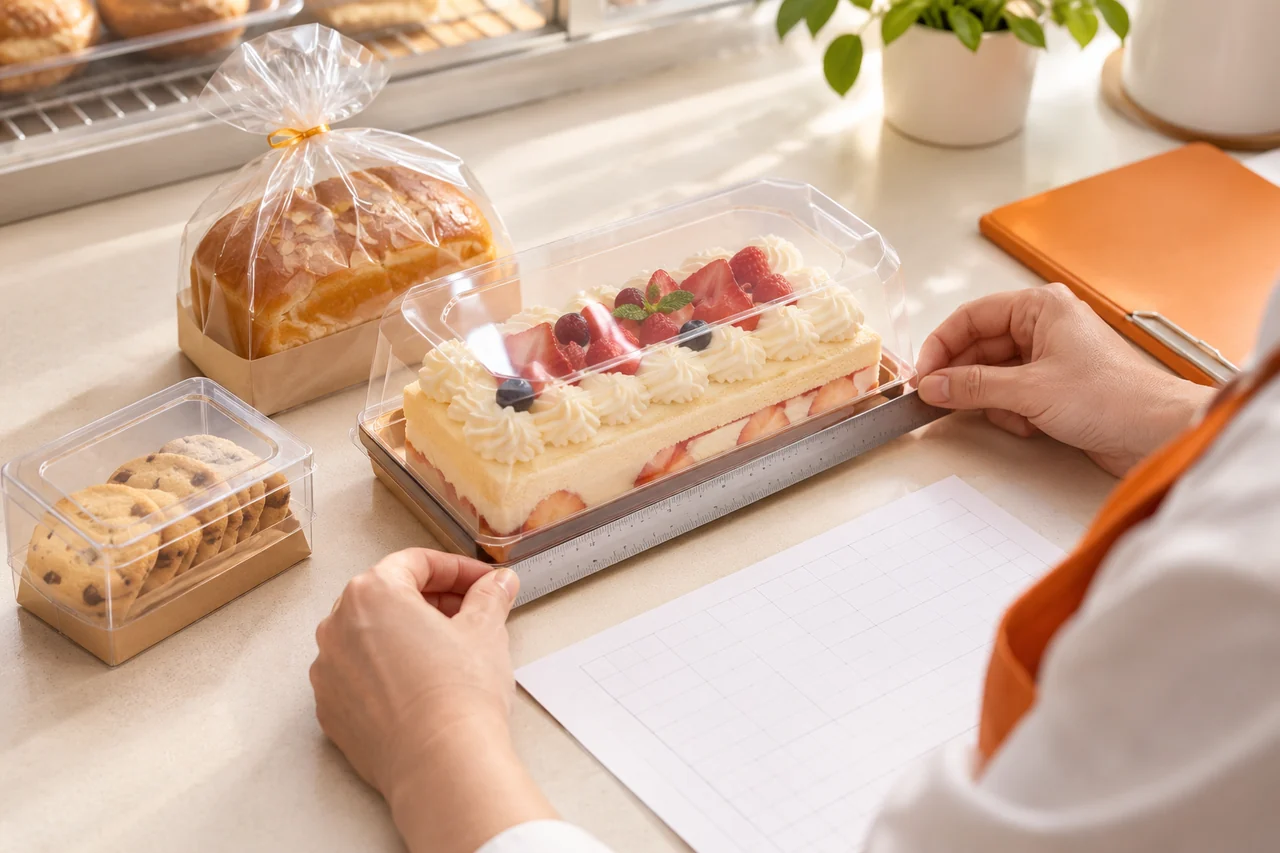
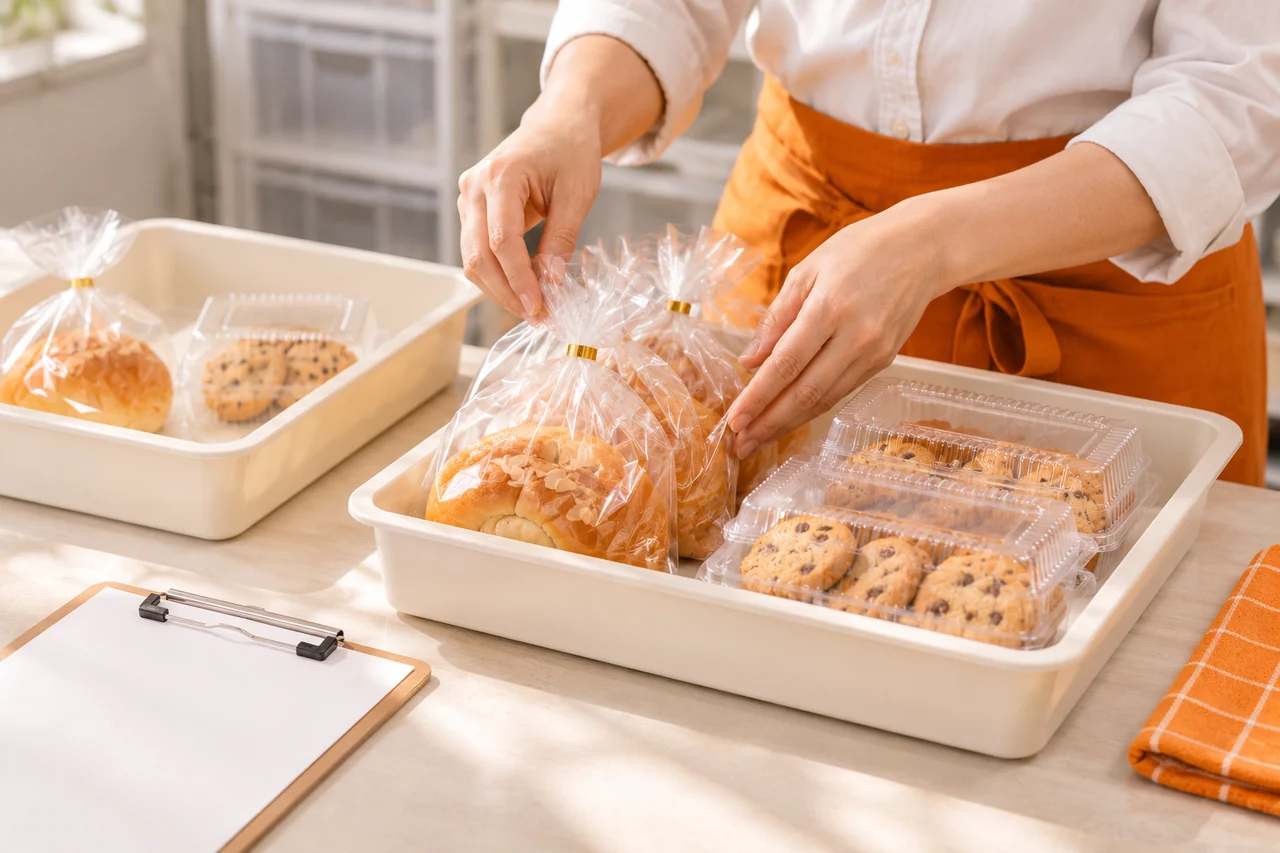
| Bread rolls and small loaves | Loaded bag shape, closure and resistance to compression | Approved channel or elevator cabinet | Film catches, loaf folds or pack exceeds the usable route |
| Cookies and biscuits | Rigid support, portion movement and sealed edges | Cookie vending machine with a tested tray and delivery path | Breakage, carton rotation or more than one pack releasing |
| Brownies and sliced cakes | Base stiffness, lid security and product movement | Elevator cabinet with a suitable receiving platform | Slice slides into the lid or the pack tips during transfer |
| Cupcakes and decorated pastries | Decoration clearance, retained base and lid stability | Compatible X-Y elevator configuration | Topping contacts the lid or base moves inside the pack |
| Whole celebration cakes | Full box dimensions, base support and removal clearance | Correctly sized individual-door cake vending machine | Box exceeds the compartment or cannot pass through the opening comfortably |
| Unwrapped, leaking or inconsistently packed items | Containment, hygiene and repeatable handling | Revise the retail package before selecting equipment | No stable, clearly labelled sale-ready unit exists |
This is a screening tool rather than a list of automatic approvals. Packaged baked goods with similar dimensions can behave differently because of stiffness, friction, weight distribution and moisture. Test the actual retail pack.
Check the locker arrangement against your actual packs
The WM22-CL locker reference has 36 + 4 compartments, with smaller W16 × H15 × D46 cm and larger W24 × H20 × D46 cm reference spaces. These are not universal cake-box sizes. Compare the closed retail pack with the usable opening and demonstrate level removal; 40 compartments does not establish capacity for 40 of your cakes.
Alternative 6, 20, 32 and 40 compartment structures allow a different arrangement to be assessed. Ask which suits your assortment rather than treating the highest count as the target. The WM22-CL cooling option is 4–20°C, subject to the food's validated requirements and the final configuration.
Assess robust products in channels or elevator delivery
Cookies and brownies need support as well as a seal
A sealed pouch prevents neither crushing nor movement inside the pack. A brittle cookie can arrive broken without any visible damage to the wrapper. Inspect the contents after a test, not just the outside. For brownies, check whether the base flexes or grease changes the package's handling characteristics.
The WEIMI WM600-W cookie vending machine reference combines elevator and conveyor transfer with middle pickup. Its bakery reference provides six floors with 10–12 channels per floor and 4–20°C cooling. These specifications establish a configuration to assess; they do not approve a cookie recipe, pack or shelf life.
Bagged bread needs a repeatable loaded shape
Measure bagged bread after packing and closing. Include the closure and any folded material that can move during loading. A bakery changing from a compact roll to a large, irregular croissant should reassess the tray rather than assuming that both fit because they use the same bag supplier.
Ask the team compiling your bakery vending machine products list to include the largest normal pack, not only an unusually neat sample. This turns the test into a useful purchasing decision.
Treat decorated products and large cakes as separate approvals
Cupcake packaging must protect the decoration
Good cupcake packaging locates the base and leaves clearance around the highest decoration. A taller dome helps only if it fits the complete delivery route and stays attached. Test the product after normal preparation and handling, with the frosting or toppings that customers will actually buy.
The WM22-XY reference uses an X-Y elevator, infrared detection and a middle automatic pickup door. It offers five floors with eight channels per floor and 4–20°C cooling. Confirm that the proposed direct-push or conveyor arrangement supports the closed pack. An elevator is one part of the assessment, not proof that the decoration will remain untouched.
Whole cakes need collection clearance
A refrigerated cake vending machine with individual lockers is worth assessing when the compatible box should be collected directly. A large celebration cake may require a different locker arrangement. Measure the clear opening and usable space, then demonstrate level removal.
Do not assign a small compartment to a large cake simply because the lid can be squeezed through at an angle. The customer's collection method must preserve the product. Locker capacity and dimensions need confirmation for the chosen configuration.
Separate the assortment by storage and saleable life
Build the storage column before finalizing the menu. Cream-filled cakes, dry biscuits and fresh bread may have different requirements depending on their formulation and packaging. Use the producer's validated conditions and local food rules; a generic product category is not a storage instruction.
The WM600-W reference allows mobile or PC temperature viewing and backend shelf-life settings, with email for temperature abnormalities and approaching expiry or expiry. Those alerts support operator attention. They do not establish safe shelf life, guarantee response or confirm automatic sales blocking.
If the planned visit schedule cannot maintain a product within its approved saleable life, reduce the quantity or remove that SKU. A broad menu that generates expired stock is less useful than a smaller, maintainable assortment.
Key takeaway: approve bakery vending machine products against one shared storage plan, or separate them into compatible groups.
Run a five-step assortment approval
- Prepare a SKU sheet with final pack dimensions, weight, orientation and required storage conditions.
- Assign each SKU a provisional tray, elevator route or locker and identify its main failure risk.
- Send representative samples to WEIMI and agree the handling and collection demonstration.
- Inspect the food and package after testing, then approve or revise the pack and layout.
- Retain the approved SKU revision and repeat assessment after a material packaging or recipe change.
WEIMI can receive real samples and provides pre-shipment video for customer confirmation. Specify which package versions the video should demonstrate. An attractive overview of the cabinet is not a substitute for evidence of the selected products completing the route.
Frequently asked questions
1. Can the machine bake bread or cookies?
The confirmed configurations dispense prepared products. Onsite baking or automatic food manufacture is not part of the established specification.
2. Can I sell unpackaged pastries?
Do not assume suitability. Establish a contained, hygienic retail unit and confirm the applicable food-handling requirements before assessing the delivery mechanism.
3. Does every cookie pack suit the same tray?
No. Shape, thickness, stiffness and weight distribution affect handling. Test the closed pack in the proposed tray.
4. Can I mix bread and cream cakes?
Only if their validated storage conditions and operating requirements are compatible with the approved configuration. Otherwise separate the products.
5. What cupcake packaging information should I send?
Send maximum external dimensions, loaded weight, photographs and actual samples. Include decoration height and how the base is retained.
6. Is an empty box an adequate test sample?
It can help assess dimensions, but it does not reproduce the weight, movement or fragility of the sale-ready product. Use actual goods for final assessment.
7. Can every cake fit a locker?
No. Confirm the compartment and clear opening, plus room for level removal. The box must work through the whole collection action.
8. Do I need to test every flavour?
Group only genuinely equivalent packs and handling characteristics. A flavour with taller decoration or a softer filling may need separate assessment.
9. Can I change my pack after shipment?
A material size, shape or support change needs renewed fit and delivery checks. Update the approved SKU record rather than relying on the original test.
10. How many launch products should I choose?
Choose a manageable set you can replenish and control. The right number comes from fit, demand and shelf life, rather than filling every position immediately.
Submit an assortment that can be tested
Build a shortlist of your largest, most fragile and most frequently purchased packs. Send their product cards with samples and review the WEIMI cupcake elevator configuration where controlled transfer is appropriate. A baked goods vending machine should be specified around an approved assortment, with unresolved products kept off the launch list until their handling and storage requirements are settled.
Baked Goods Vending Machine: Which Type Fits Your Bakery?
Micron Smart Vending System Boosts Your Vending Sales
Related Article