Baked Goods Vending Machine: Do Your Products Need Cooling?
A baked goods vending machine needs cooling only when the approved storage requirements of its products call for it. Start with each recipe, filling, package and shelf life, then select equipment that can maintain those conditions at the intended site. Buying the coldest cabinet does not establish that bread, cookies and cream cakes can safely share it.
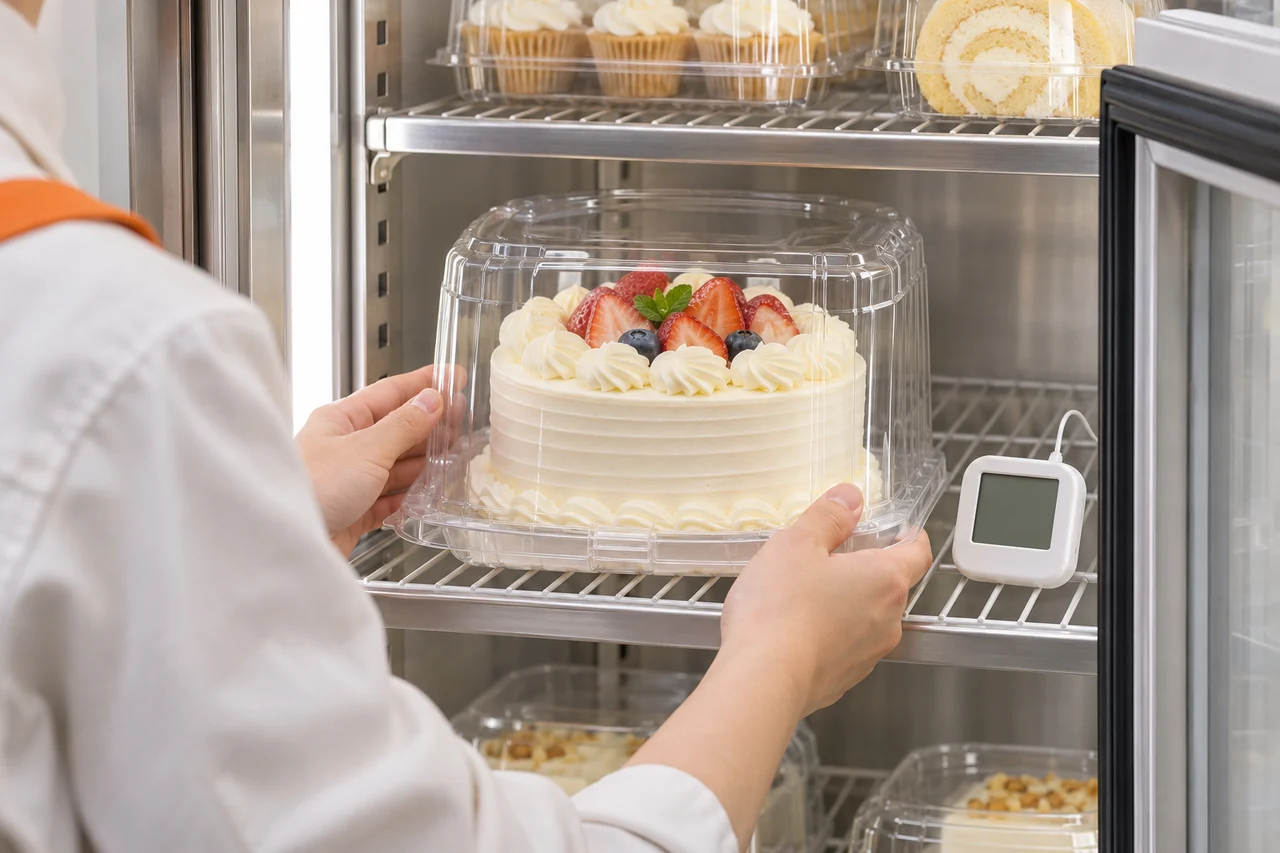
Choose storage conditions before choosing a cabinet
What bakery refrigeration must achieve
Bakery refrigeration is the controlled storage of bakery products within the conditions established for their particular recipe, packaging and intended life. It is not a universal freshness setting. A sealed dry cookie and a cream-filled pastry can have different requirements even when both fit the same tray.
Ask the producer or your food-safety adviser to specify the acceptable conditions for every SKU. Include handling before loading, storage in the machine and the customer's collection instructions. Local rules also apply. A machine's temperature range describes equipment capability; it does not create a validated shelf life.
Separate food safety from eating quality
Cake storage must protect the product's required conditions and its presentation. Bread also needs a quality assessment: the coolest available setting is not automatically the best choice for texture. Test the actual recipe and package over the intended selling window rather than borrowing a time limit from another bakery.
Our position is simple: approve the product's storage plan first. A refrigerated bakery vending machine should be selected to meet that plan, not used to invent it.
What the reference cooling specifications actually tell you
| Reference equipment | Confirmed cooling information | What still needs checking |
|---|---|---|
| WM600-W bakery cabinet | 4–20°C reference range | Required product conditions, loaded performance, loading routine and site limits |
| WM22-XY cupcake cabinet | 4–20°C reference range | Actual cupcake box, recipe, operating conditions and final configuration |
| WM22-WZ bread and pastry reference | Brochure states a lowest temperature of −18°C | Adjustable range and suitability for the proposed chilled or frozen application |
| WM22-CL cake locker | 4–20°C cooling option; a separate freezing option states a lowest temperature of −20°C | Selected option, exact operating range, compartment fit and loaded cake-storage performance |
The WM22-WZ's stated minimum is not evidence of a continuous adjustable range or approval for every frozen product. Equally, a lower endpoint of 4°C does not prove that a cabinet meets every chilled-food requirement. The final equipment specification and operating limits must match the particular application.
WM22-CL cooling and freezing are alternative configurations, not evidence of two independently controlled zones. WEIMI identifies this locker format as a frequently purchased option among its customers. Treat that experience as a reason to assess the format, not as proof that it suits your cakes.
A WEIMI cupcake vending machine with XY elevator combines cooling with a delivery route for prepared packaged products. Delivery design and thermal suitability are two separate acceptance decisions.
Build a storage-requirements sheet for each SKU
Record the conditions that change the decision
For each item, record its name and recipe version, filling or topping, package material, approved storage limits, date marking and maximum selling window. Add the source of those requirements and the person who approved them. This turns “keep it fresh” into a specification your bakery and equipment supplier can review.
Then list the loading condition. Products arriving from a chilled delivery route must remain within their approved handling plan. Do not assume the vending cabinet is designed to cool a batch of warm baked goods rapidly. Confirm that duty separately if your process requires it.
Decide which products may share one temperature zone
A single shared zone needs conditions acceptable to every SKU in it. If the permitted conditions do not overlap, split the assortment or use separately confirmed storage arrangements. Putting incompatible items on different shelves does not create independently controlled zones.
For example, a bakery considering packaged cookies alongside decorated chilled cakes should approve both products independently. The result may be two formats rather than one mixed cabinet. That is a useful design decision, not lost capacity.
Verify the loaded machine before opening sales
A proposed five-step acceptance procedure
- Agree the target conditions and pass criteria with the responsible food operator before testing.
- Load representative packages in the proposed positions, with the supplier's required clearances.
- Use suitable checked instruments to assess representative storage positions under the agreed site conditions.
- Include normal replenishment and customer access, then record recovery and any unacceptable excursion.
- Approve the layout and routine only after the results meet the agreed product requirements.
This is a recommended buyer procedure, not a claim that every WEIMI machine has already completed the same trial. Testing conditions should reflect the actual installation. A lightly loaded indoor demonstration cannot establish performance for a crowded cabinet beside a sunlit window.
Air needs space to circulate. Filling every visible gap can change the approved loading pattern, so mark usable positions and prohibited obstructions. Repeat the relevant assessment when packaging, stock density or the operating environment changes.
Key takeaway: accept a loaded operating system, including the product and refill routine, rather than a temperature number on an empty cabinet display.
Connect alerts to a real operator response
What has been confirmed for WM600-W
For the WM600-W bakery configuration, operators can view temperature through a mobile or computer backend and enter product shelf-life information. Temperature abnormalities and approaching-expiry or expiry events trigger operator emails. Confirm the project settings and responsible recipients before launch.
Bakery temperature monitoring is useful only when somebody can act. Assign a primary recipient and backup, test email delivery, and agree who can attend the site. An email does not remove affected stock or prove it remained acceptable.
Write an exception rule before the first incident
Automatic sales blocking has not been established for this configuration. Define how operators will restrict sales when needed, identify affected batches and follow their approved food-safety procedure. Do not resume selling solely because the display returns to its target.
Use bakery temperature monitoring alongside a record of loading times, batch dates and corrective actions. This makes an alert actionable. It also helps distinguish a brief access event from a recurring problem requiring maintenance, without guessing that either event is harmless.
Frequently asked questions
1. Does every baked goods vending machine need refrigeration?
No. The product's validated requirements decide. Some packaged baked goods may suit non-refrigerated storage, while other recipes need controlled chilling or freezing. Confirm the individual product and local requirements.
2. Can cream cakes and packaged bread share a cabinet?
Only if both approved storage plans work in the same confirmed conditions. Consider quality, packaging and handling as well as temperature. A shared cabinet should be a verified choice.
3. Does a 4–20°C range guarantee safe cake storage?
No. Cake storage depends on the recipe, required limits, time and actual loaded performance. Check those requirements against the proposed configuration before approving the machine.
4. Is colder always better for bakery products?
No. Bakery refrigeration must suit the food and the intended eating quality. Test the recipe and package at the proposed conditions; do not choose the lowest number by default.
5. Can the machine cool products straight from the oven?
Do not assume that capability. The confirmed products dispense prepared packaged goods. Establish an appropriate cooling and loading process outside the cabinet unless a different duty is explicitly approved.
6. What temperature should I set for cupcakes?
Use the producer's validated requirement for the specific cupcake, filling and topping. The cupcake vending machine reference range is equipment information, not a universal cupcake-storage instruction.
7. Do expiry emails automatically stop sales?
That function has not been confirmed. WM600-W email alerts are established, but the operator must verify any sales restriction feature and document the required manual response.
8. Can I check temperature away from the site?
Mobile and computer temperature viewing is confirmed for the WM600-W bakery discussion. Confirm the selected software, connectivity, access and alarm settings for your own order.
9. Must I test every new package?
Review any package or assortment change that may affect storage or airflow. The amount of repeat testing depends on the change and the responsible operator's approved procedure.
10. Does refrigerated storage determine shelf life?
No. A refrigerated bakery vending machine maintains agreed conditions; it does not validate a recipe's shelf life. Obtain the appropriate product evidence and apply local requirements.
Send a storage specification with your enquiry
Send WEIMI your SKU list, package dimensions, validated storage requirements, loading process and intended site conditions. Start with the WM22-CL refrigerated cake locker format when direct compartment collection suits the package, and compare an elevator cabinet where appropriate. Ask for written confirmation of the selected cooling option and an agreed acceptance plan before placing the order.
Baked Goods Vending Machine: How Do You Prevent Damage?
Baked Goods Vending Machine: How Do You Choose a Location?
Related Article