Baked Goods Vending Machine: Which Type Fits Your Bakery?
Choose a baked goods vending machine around the packaged products you intend to sell. Assess individual lockers first when the pack fits direct compartment collection; compare channel or elevator delivery where that better serves the assortment. Then confirm storage, local payments and site access. The right format handles your actual products reliably, rather than simply offering the longest feature list.
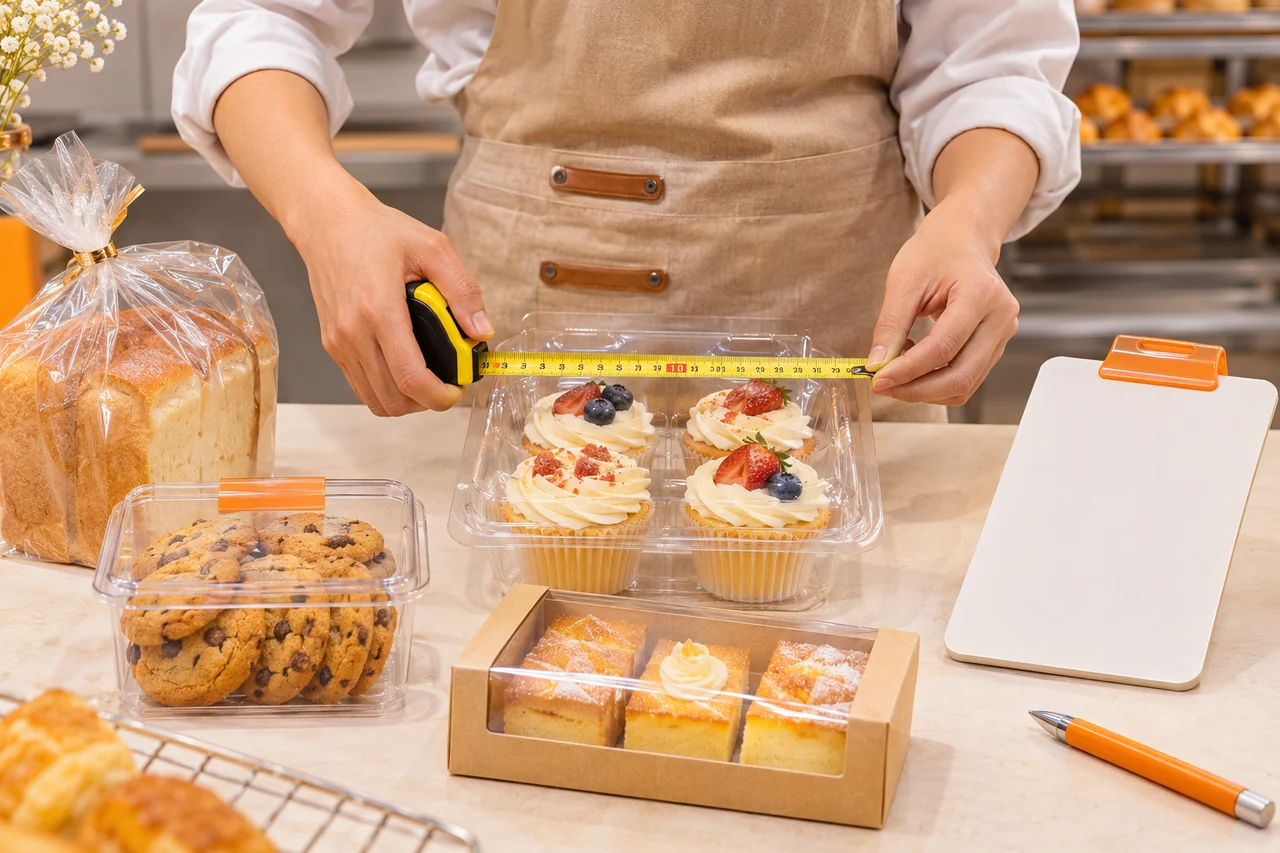
Start with the saleable package rather than the machine photograph
A bakery vending machine is equipment that stores prepared products and releases a purchased item or opens its assigned compartment. The configurations discussed here dispense packaged goods; they do not mix dough, bake bread or decorate cakes.
That distinction matters for an established bakery. Your production team still controls recipes, packaging, labelling and shelf life. The equipment adds a retail channel, which must fit those existing processes. A machine that works for a sealed cookie carton may be unsuitable for a tall cupcake dome, even if both products weigh the same.
Create one product card for every intended SKU
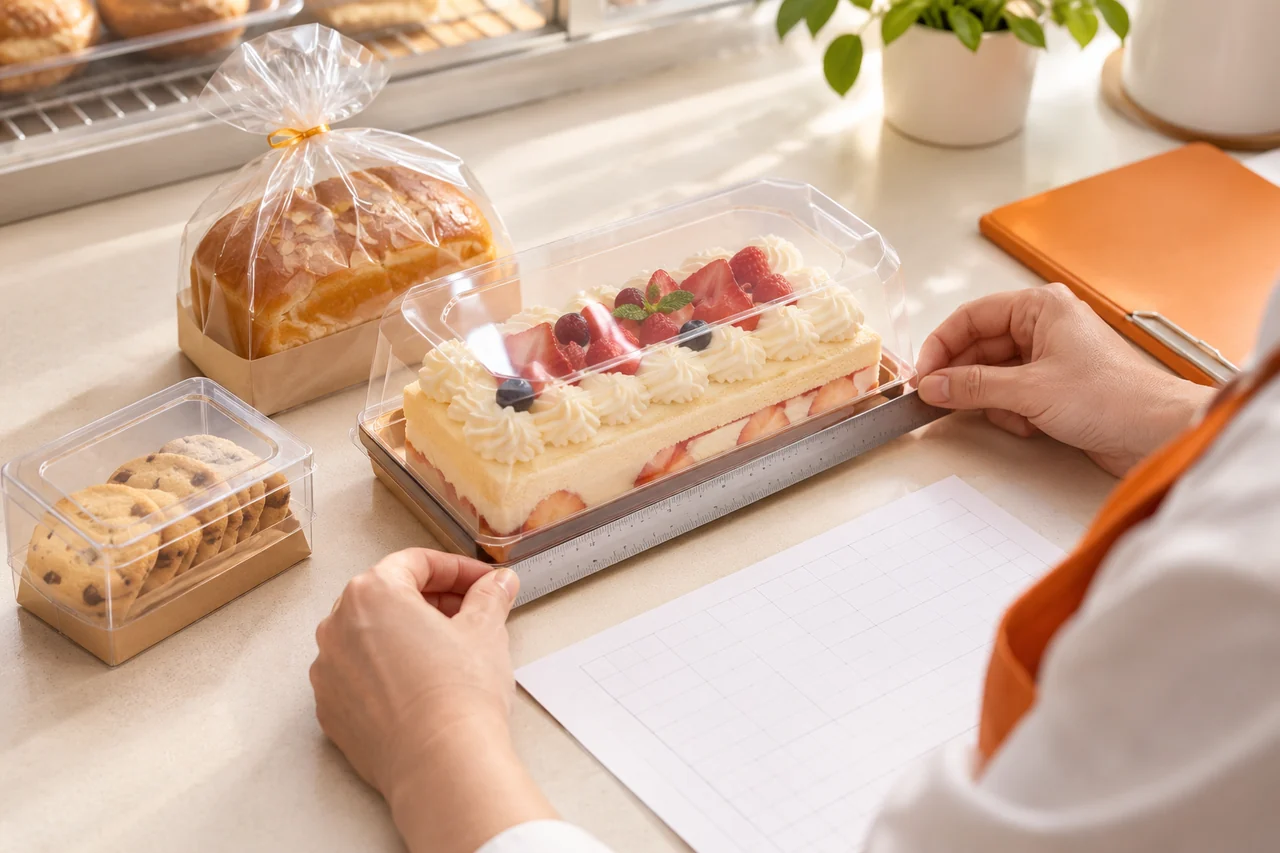
Record the closed package's maximum width, depth, height and weight, including tabs and labels. Add its required orientation, storage conditions and saleable-life limit. Photograph the package from the front, side and base. A flexible bag needs measurement in its loaded shape, not laid flat on a desk.
For example, a bakery selling breakfast rolls and celebration cakes has two different handling problems. The rolls need a suitable channel and controlled release. The cake needs enough clearance for its box and for the customer's hands during removal. Combining them under the single description “bakery products” hides the decisions that matter.
Compare the three delivery formats
| Format | Useful starting application | Main approval question | What the buyer should observe |
|---|---|---|---|
| Individual-door locker | Compatible boxed baked goods better collected directly from a compartment | Can the closed pack fit, remain correctly stored and be removed comfortably? | Clear door opening, usable interior space, shelf support and customer reach |
| Spiral or other channel cabinet | Robust, consistently packed rolls, biscuits or bakery snacks | Can the approved channel release one pack without catching or crushing it? | Pack orientation, separation, release and the complete route to pickup |
| Elevator cabinet | Boxed cookies, brownies or compatible delicate cakes | Does the transfer mechanism support the actual pack through each handoff? | Shelf exit, platform alignment, movement, handoff and removal |
Start with lockers when direct collection fits the package
A cake locker vending machine gives the customer access to an individual compartment. This avoids a shared dispensing path, while creating different constraints: compartment dimensions, box clearance, customer reach and allocation of space. Start here for compatible delicate packs, but verify the real opening; a nominal compartment count does not mean that every cake box fits.
Use channels when the package can tolerate the route
A bread vending machine may offer spiral, direct-push or conveyor tray options. These are alternatives to evaluate with the supplier, rather than interchangeable settings for every pack. A loose film tail can catch; a soft pouch can fold; a shallow carton can rotate. The appropriate tray should emerge from the sample test.
Use an elevator when transfer control solves a real problem
An elevator vending machine moves a receiving platform to collect or transport a selected product. It can change the delivery route, but it cannot compensate for an unstable box or inadequate internal support. Ask to see every transfer point. A short video of only the final pickup door leaves most of the handling question unanswered.
Read the four WEIMI references as different configurations
The WM22-CL locker reference has electric locks and a 36 + 4 compartment arrangement. Reference compartment dimensions are W16 × H15 × D46 cm for the smaller size and W24 × H20 × D46 cm for the larger size. The cabinet measures W166 × D70 × H199 cm. Alternative 6, 20, 32 and 40 compartment structures are layouts to select, not extra machines or guaranteed cake capacities.
Its cooling option is 4–20°C; a separate freezing option states a lowest temperature of −20°C. These are alternatives, not independently controlled zones in one cabinet. Confirm the food's requirements and actual pack fit before choosing either.
The WM22-WZ bread and pastry reference has six floors with nine channels per floor, an included elevator and spiral, direct-push or conveyor tray options. Its dimensions are W140 × D94 × H199 cm. The specification states a lowest cooling temperature of −18°C; that is not a confirmed adjustable range or a recommendation to freeze fresh bread.
The WM600-W reference offers six floors with 10–12 channels per floor, elevator and conveyor transfer, middle automatic pickup and 4–20°C cooling. Its dimensions are W162 × D95 × H195 cm. The wider cabinet may support a different approved layout, but the channel count does not reveal how many of your packages it can hold.
The WM22-XY cupcake reference has five floors with eight channels per floor, an X-Y elevator and middle automatic pickup. It lists direct push as the default tray and conveyor as an option, with 4–20°C cooling. The reference measures W122 × D95 × H194 cm; cash or coin devices require an additional 30 cm of width.
All four detailed references list a 21.5-inch touchscreen. Compare the WEIMI WM22-CL refrigerated locker with the WM22-XY cupcake vending machine using your product cards. Approve the actual build in the quotation.
Apply three gates before comparing purchase prices
Gate 1: storage requirements
Ask your food-production lead which storage conditions each SKU requires. A machine's cooling specification does not establish a product's shelf life. If two products require incompatible conditions, do not put them in one cabinet simply to broaden the selection. Verify the loaded configuration under the planned site conditions.
Gate 2: destination and payment support
Identify the country, site and preferred local payment provider before fixing the equipment specification. The customer needs merchant-account onboarding and an agreement with the payment provider. A reader in a brochure does not establish that the same device supports your particular merchant account or is included in the quoted price.
Gate 3: replenishment and physical access
Measure the delivery route, doorway and installation space, allowing for servicing and customer collection. Compare replenishment effort as well as cabinet size. A bakery vending machine that requires awkward loading or obstructs the shop entrance will create daily work regardless of its advertised features.
Key takeaway: reject a configuration that fails product handling, storage or destination requirements before scoring its optional features.
Use a five-step selection brief
- List the launch SKUs, closed package dimensions, weights and required storage conditions.
- Choose a provisional delivery format for each SKU and explain the handling reason.
- Send representative samples to WEIMI and agree what the demonstration must show.
- Confirm site access, payment-provider requirements and the exact equipment layout.
- Approve the sample results and itemized quotation before accepting the final configuration.
Keep one written decision for every rejected format. This prevents a later price comparison from quietly replacing a tested specification with a cheaper but unsuitable alternative. For a chain, retain the approved package revision too; a new cake box can change a previously successful result.
Frequently asked questions
1. Is one format best for every bakery?
No. Selection depends on the actual package, storage requirement and collection method. Start with the assortment rather than a universal machine recommendation.
2. Can a bread vending machine sell pastries?
Potentially, if the closed pastry pack fits the approved tray and survives the full delivery route. A shared product category is not a fit test.
3. Does an elevator vending machine prevent all damage?
No. The platform, transfer points, packaging and customer removal still require assessment. Request evidence using your real products.
4. When is a cake locker vending machine worth assessing?
Assess it for compatible boxed baked goods where individual-door collection suits the product and site. Large cake boxes may need a different compartment arrangement.
5. What should I check on a cupcake vending machine?
Check closed dome height, topping clearance, base stability, transfer support and removal space. Test the exact packaging rather than an empty substitute.
6. Can I send samples before ordering?
Yes. Customers can send actual samples to WEIMI, and pre-shipment video is provided for customer confirmation. Agree the samples and review criteria beforehand.
7. Do channel totals equal stocked units?
No. Stocked units depend on usable channel depth, package size, loading pattern and the approved configuration. Ask for a SKU-level layout.
8. Does cooling establish safe shelf life?
No. Use your producer's validated storage and shelf-life requirements and applicable local rules. Verify that the chosen equipment can maintain those conditions.
9. Are the listed payment devices always included?
No. The supplied reference quotations exclude the payment system. Confirm hardware, integration and provider charges separately.
10. Can I expand the assortment after installation?
Only after checking the new package, storage compatibility and delivery performance. Treat a materially different SKU as a new approval task.
Turn your shortlist into a tested configuration
Send WEIMI three representative packs: the largest, the most delicate and the expected best seller. Include their dimensions, storage requirements and destination payment preferences. Compare the refrigerated cake locker where direct collection is appropriate. Select a baked goods vending machine only after the proposed route and final package work together.
Baked Goods Vending Machine: What If Payment or Delivery Fails?
Baked Goods Vending Machine: Which Products Can You Sell?
Related Article